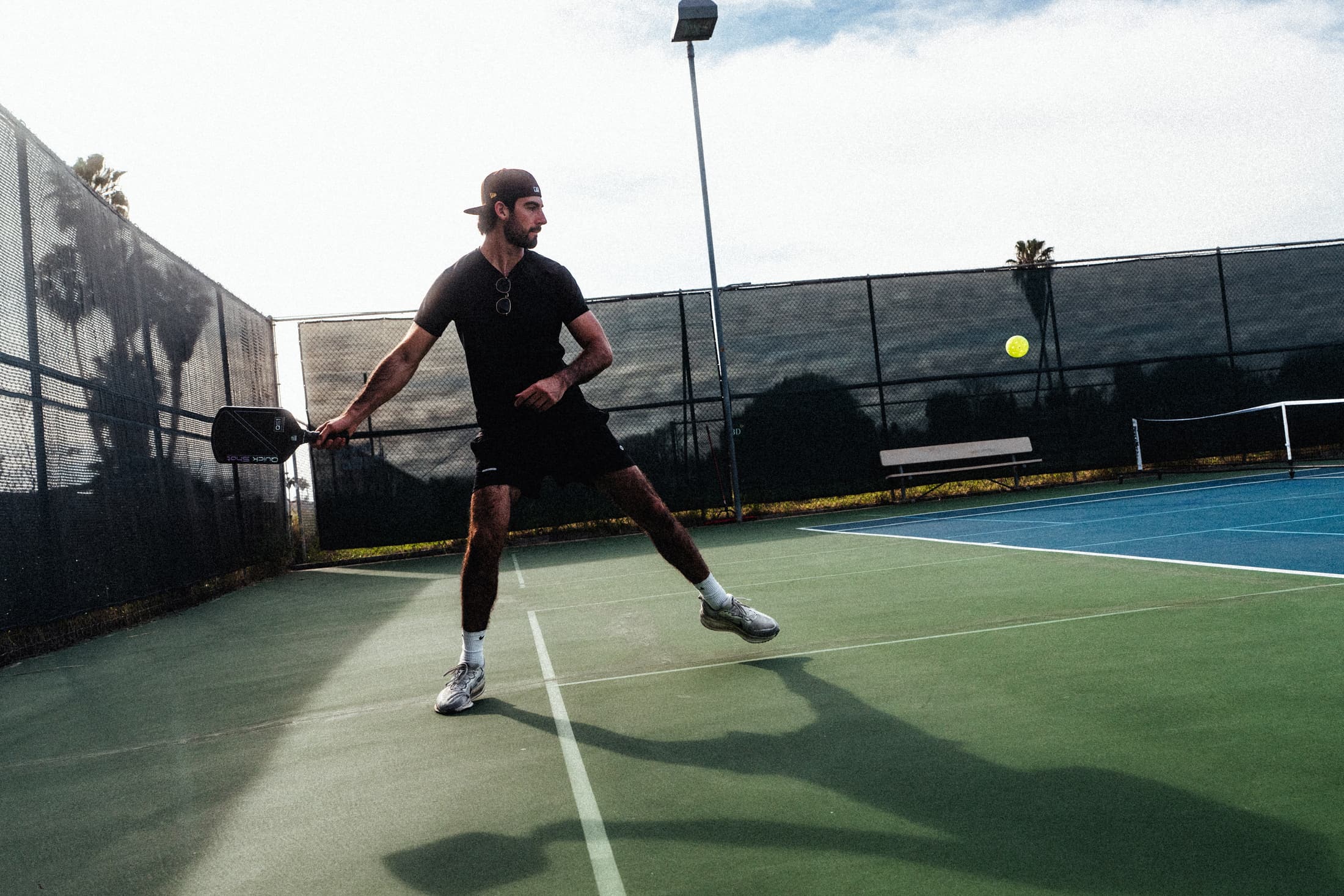
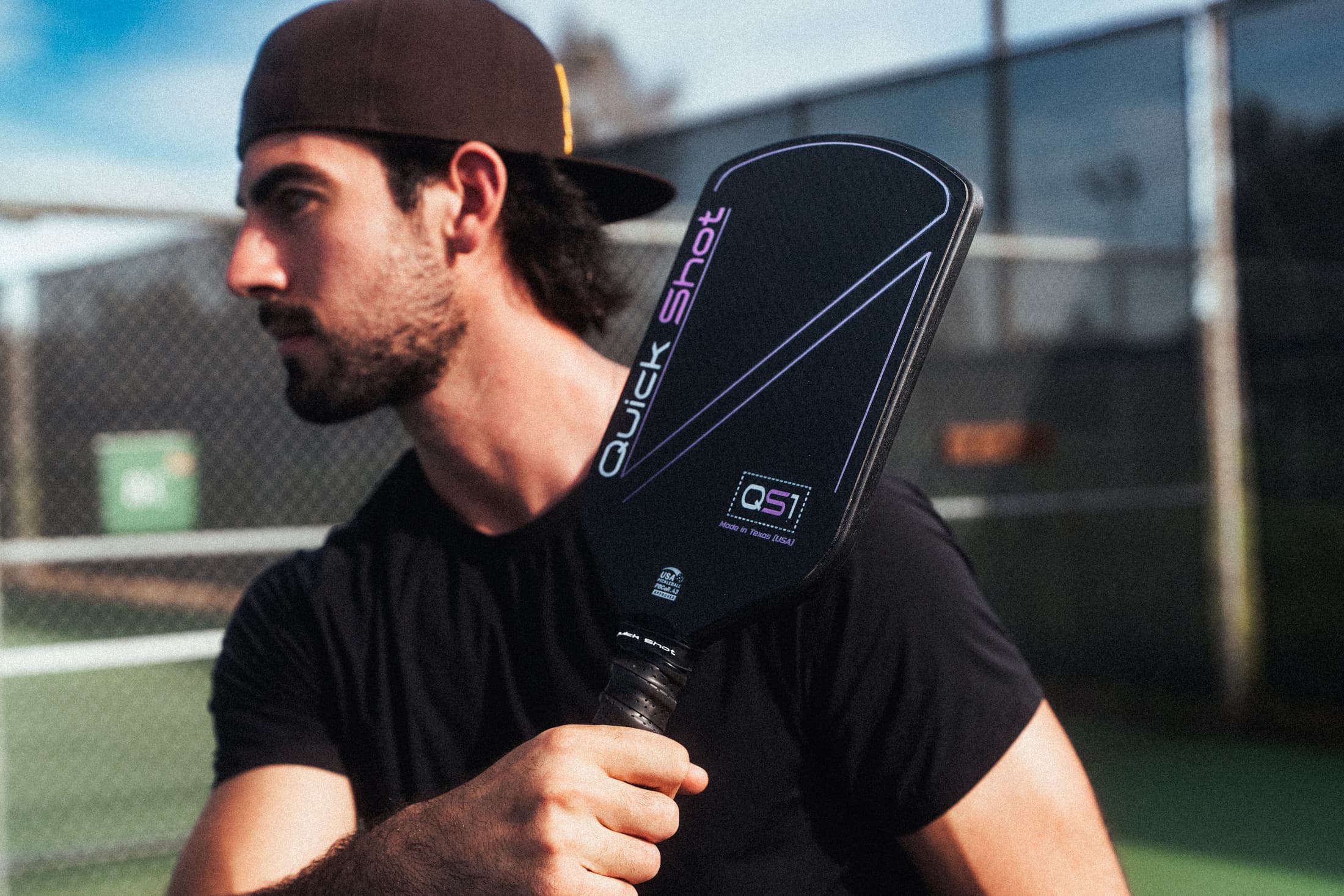
Best Pickleball Paddle for Tennis Elbow: How to Protect Your Arm in 2026
Pickleball elbow is the most common injury in the sport, and it is mostly preventable with the right paddle. If you are playing three or more days a week and feel a sharp pain on the outside of your elbow within a few minutes of starting to play, this article is for you.
What Causes Pickleball Tennis Elbow
Tennis elbow (lateral epicondylitis) is an overuse injury of the extensor tendons that attach to the outside of your elbow. Three things drive it in pickleball players:
- Shock and vibration from hard paddle contact traveling up the forearm with every mis-hit.
- Grip strain from squeezing the handle too tightly, often because the grip is the wrong size.
- Swing volume — many pickleball players jump from 0 sessions per week to 5+ sessions per week in a few months, with no conditioning.
You can't do much about swing volume without benching yourself for weeks. But you can absolutely fix the paddle.
The Specs That Protect Your Arm
1. A 16mm Polypropylene Core
Thicker cores absorb impact energy before it travels into your hand. A 16mm core transmits significantly less shock than a 13mm or 14mm core. This is the single biggest variable. If you are arm-sensitive and someone recommends a 13mm thermoformed paddle for more power — ignore them.
2. Paddle Weight Under 7.8 oz
Every additional ounce the paddle weighs is another ounce your forearm has to stabilize on every swing. Cap yourself at 7.8 oz — ideally closer to 7.6 oz. A full reference on weight lives in our paddle weight guide.
3. A Correctly-Sized Grip
An oversized grip forces your forearm muscles to overwork to keep the paddle stable. That overwork is what inflames the tendons at the elbow. Measure your grip using the methods in our grip size guide and size down if in doubt.
4. A Cushioned Overgrip
Swap the stock grip for a cushioned overgrip (Gamma Supreme or Wilson Pro Overgrip). The extra millimeter of foam and the tacky surface reduce the squeeze-pressure needed to keep the paddle from slipping, which in turn reduces tendon load.
5. A Raw Carbon Fiber Face (Not Fiberglass)
Fiberglass paddles feel poppier but actually transmit more vibration to the arm on mis-hits. Raw carbon fiber paddles absorb and distribute the impact more evenly. This is counter-intuitive — the stiffer material is friendlier on the arm — but it is consistent across lab testing.
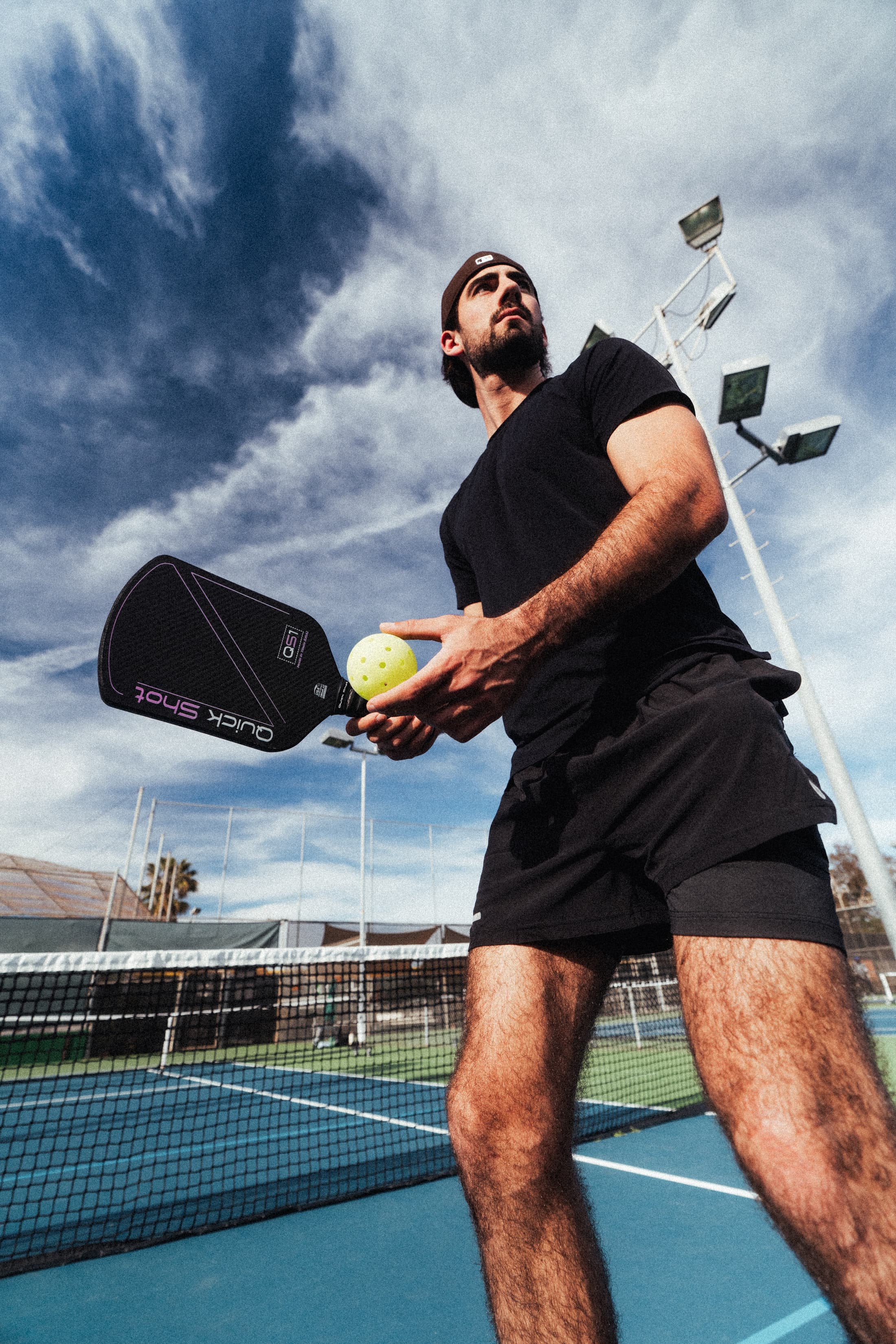
The Spec Combination That Wins
The elbow-friendly paddle profile:
- 14mm honeycomb polymer core with a vibration-dampening 3D printed grip (the QS1 approach) — or a 16mm core if you prefer the thicker-core route
- Raw 3K Twill carbon fiber face
- 7.5–7.8 oz static weight
- 4 1/8" or 4 1/4" grip with cushioned overgrip
- Widebody or hybrid shape (higher twist weight forgives mis-hits)
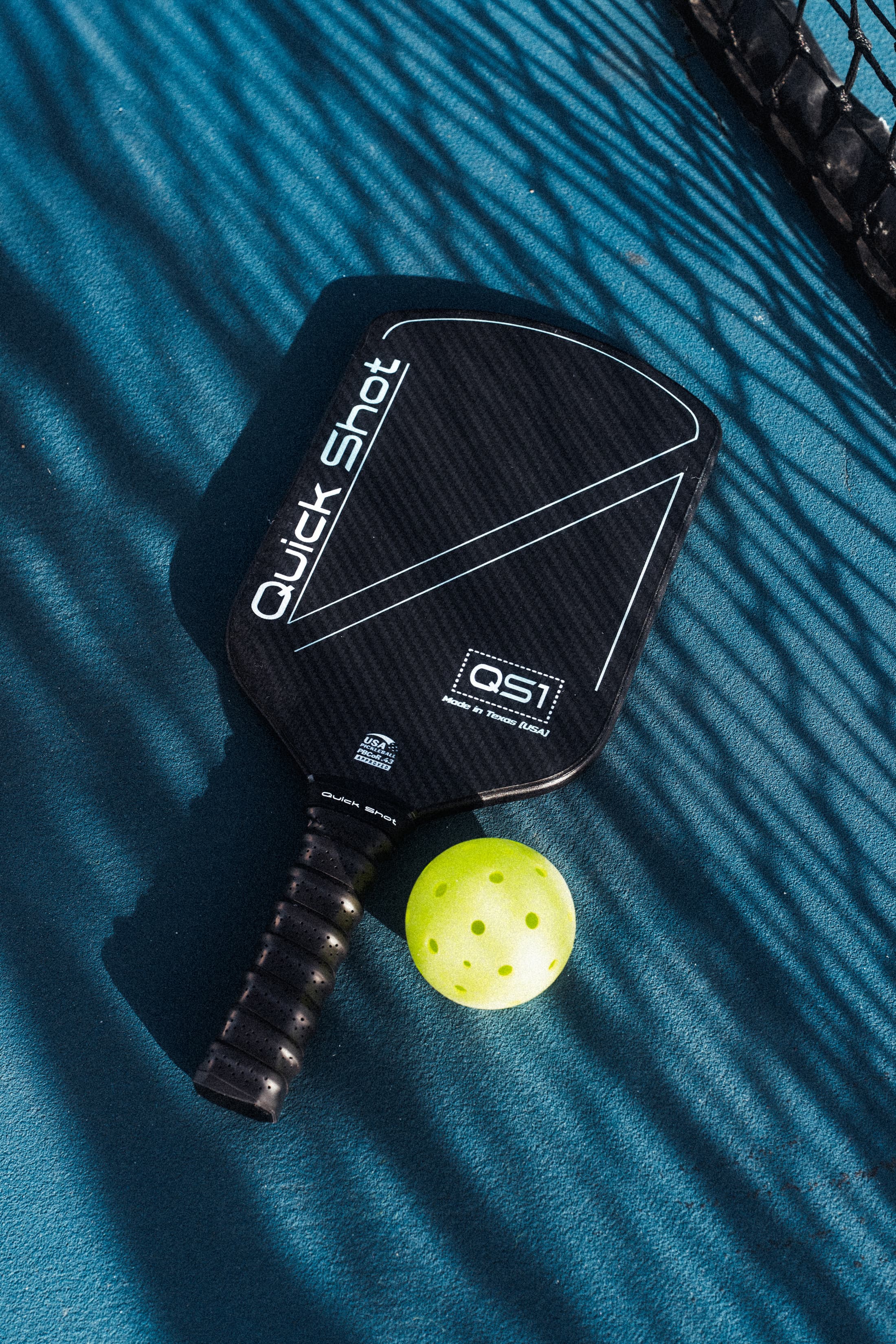
The Quick Shot QS1 takes a different approach than the generic "go thicker core" advice: it uses a 14mm honeycomb polymer core paired with a proprietary vibration-dampening 3D printed grip. That grip is the real differentiator — it absorbs shock and vibration at the handle before it reaches the wrist and elbow, letting players log longer sessions without the arm fatigue that accumulates with conventional grip construction.
Ready to Upgrade Your Game?
Shop premium pickleball paddles, designed and manufactured in the US — carbon fiber faces, honeycomb cores, USA Pickleball approved.
Shop Quick Shot PaddlesTechnique Fixes That Matter
Even the perfect paddle will not save you from bad technique. Three quick fixes that dramatically reduce elbow load:
- Loosen your grip. Hold the paddle with a 4/10 squeeze, not a 9/10. Tight grips transmit vibration directly into the elbow.
- Use your shoulder and torso, not your wrist. Drive your dinks and resets with a shoulder turn. The wrist is for spin and touch, not for raw pace.
- Bend your knees more. Absorb low balls with your legs, not with a stiff arm reach. Most players are too upright, which forces the arm to do work the legs should be doing.
What If the Pain Is Already There?
If you already have elbow pain, no paddle will fix a tendon that is actively inflamed. Take a week off, ice the outside of the elbow, and do slow eccentric wrist extensions with a 1–3 lb dumbbell. Then come back with the right paddle. Playing through pain with the wrong paddle is how a 2-week injury turns into a 6-month injury.
Our Recommendation
Every Quick Shot paddle is built with an elbow-friendly spec by default. The QS1 uses a 14mm polypropylene honeycomb core and a proprietary vibration-dampening 3D printed grip — that grip is engineered to absorb shock and vibration at the handle, which is exactly where the chain to your elbow starts. Combined with a mid-weight build and raw 3K Twill carbon face, it keeps arm strain low across long sessions. If you are picking between specific models, the standard widebody or hybrid QS1 is our lightest, most arm-conscious option.
For a broader walk-through of every paddle spec, see the full best pickleball paddle 2026 guide.
?Frequently Asked Questions

Co-founder and lead play-tester at Quick Shot Paddles. Sets the performance bar for every paddle before it ships.