Best Pickleball Paddle 2026: The Complete Buyer's Guide
Choosing the best pickleball paddle in 2026 does not have to be complicated. If you cut through the marketing, there are only five variables that actually determine how a paddle plays — face material, core thickness, shape, weight, and grip size — and a sixth that decides whether you can play with it anywhere that matters (USA Pickleball approval). This is our complete pillar guide to the best pickleball paddles of 2026, with a link to every supporting article in our paddle library so you can go deeper on any question.
This guide is product-agnostic on purpose. We make pickleball paddles ourselves, but the framework below is how you should evaluate any paddle — ours, Selkirk, Joola, Paddletek, CRBN, Engage, Six Zero, or the no-name that sneaks into your group's equipment pile. At the end, we'll show you how the Quick Shot QS1 maps onto these specs.
The 2026 shortlist: what a great pickleball paddle looks like now
Before we go deep, here is the 30-second version. A great pickleball paddle in 2026 has:
- A raw carbon fiber face (3K twill weave, unpainted)
- A 14mm or 16mm polypropylene honeycomb core
- A well-bonded build with a unibody or hybrid edge (not a plastic edge guard glued on)
- A total weight around 7.8–8.2 oz
- A 4 1/4" grip (add overgrip to size up)
- USA Pickleball approved for tournament play
The rest of this article is about how each of those variables actually changes the game in your hand.

1. Face material: carbon fiber is the 2026 standard
The hitting face is what actually contacts the ball. It controls spin, feel, and durability. In 2026, premium paddles are built around raw carbon fiber — typically woven in a 3K twill pattern. Raw (unpainted, unsealed) carbon gives you a gritty surface that grabs the ball on contact, which is where spin comes from.
The full breakdown of why carbon beats fiberglass is in our carbon fiber vs fiberglass comparison, and if you want to geek out on the weave itself, we wrote a deep dive on 3K twill carbon fiber. There's also a dedicated carbon fiber paddle buyer's guide if you've already decided on carbon and want help choosing between models.
2. Core: 14mm vs 16mm (and why most players should start at 16mm)
Almost every modern pickleball paddle uses a polypropylene honeycomb core. The variable that matters is the thickness. A thinner core (13–14mm) compresses less and feels "poppy" — good for power. A thicker core (16mm) compresses more, widens the sweet spot, and feels plush — good for control and touch.
The full guide is our 14mm vs 16mm paddle breakdown, and if you want the engineering behind the cell structure itself, our honeycomb core technology guide covers that. Considering foam? Read foam core vs honeycomb core first — spoiler: foam is not a free upgrade.
3. Weight and swing weight
Static weight (the number on the spec sheet) is only half the story. The metric that actually affects your game is swing weight — how heavy the paddle feels mid-swing because of how mass is distributed in the head. A 7.9 oz elongated paddle can swing heavier than an 8.2 oz widebody. Both our paddle weight guide and our swing weight and twist weight explainer are worth reading if this is new to you.
4. Shape: elongated vs widebody
Paddle shape affects reach, sweet spot location, and how forgiving off-center hits feel. Elongated paddles (16.5" x 7.5") give you reach and a higher sweet spot — the competitive advanced player's default. Widebody paddles (16" x 8") give you a bigger, more central sweet spot — better for beginners and dinking specialists.
Go deeper in our elongated vs widebody paddle comparison, or see where the sweet spot actually sits on each shape.
5. Grip size
A grip that's too small makes you over-squeeze, which kills wrist snap and leads to tennis elbow. A grip that's too big reduces spin. Most adult players fit a 4 1/4" circumference. You can always add an overgrip to move up a size; you cannot go down. Our grip size guide includes a DIY measurement method.
6. USA Pickleball approval
If you're playing in any sanctioned league, tournament, or club event, your paddle must be USA Pickleball approved under the 2026 regulations. This is not optional. Quick Shot paddles and every paddle we recommend on this site meet the current USAP standard.
Ready to Upgrade Your Game?
Shop premium pickleball paddles, designed and manufactured in the US — carbon fiber faces, honeycomb cores, USA Pickleball approved.
Shop Quick Shot PaddlesBest pickleball paddle by player type
The "best" paddle depends entirely on your skill level, play style, and physical condition. We've written focused guides for each player profile — go straight to the one that fits you:
- Best pickleball paddles for beginners
- Best pickleball paddles for intermediate players
- Best pickleball paddles for advanced players
- Best pickleball paddles for seniors
- Best pickleball paddles for women
- Best pickleball paddles for tennis elbow
- Best pickleball paddles for spin
- Best paddles for control vs power
Best pickleball paddle by budget
- Best pickleball paddles under $200 — entry into carbon fiber
- Best pickleball paddles under $300 — tournament-ready without the flagship tax
How to test a paddle before buying
Most paddle companies offer demos or a 30-day return window. Use them. Our guide on how to test a pickleball paddle before buying gives you the 6-shot test we use on every demo paddle. And if you already own a paddle, our break-in guide explains whether it's actually broken in or just broken down.
Brand comparisons
If you're cross-shopping, we have head-to-head takes here:
How the Quick Shot QS1 fits this guide
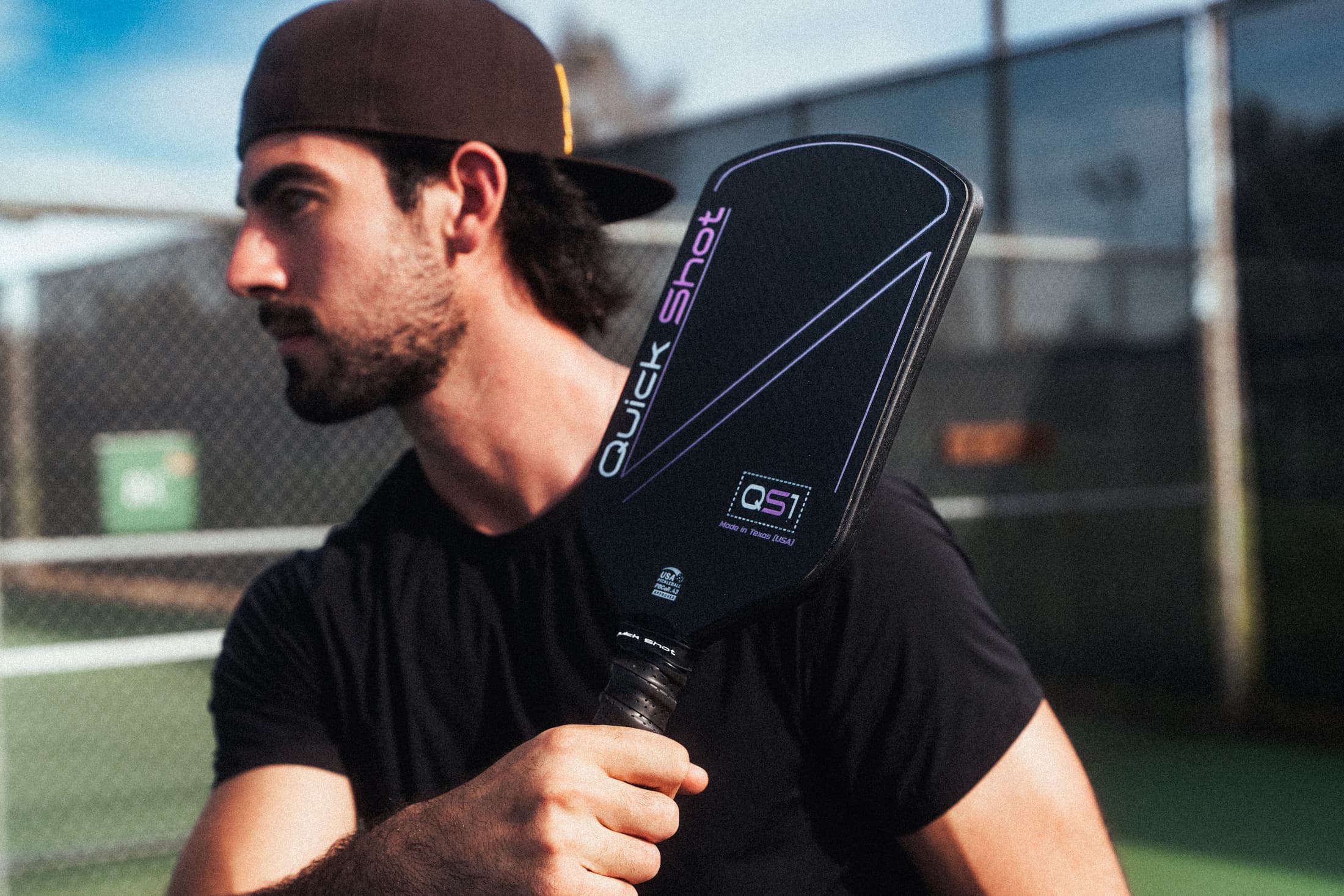
The QS1 was designed around this exact spec list: raw 3K twill carbon fiber face, 14mm polypropylene honeycomb core, a pressed hybrid-edge build, ~8.0 oz static weight, 4 1/4" grip, USAP approved. On top of that, every paddle is made in the USA, ships with an NFC chip for one-tap registration and stat tracking, and is covered by our 12-month limited warranty.
Bottom line: what's the best pickleball paddle for you?
If you take nothing else away from this guide:
- Pick a raw carbon fiber face.
- Pick 16mm unless you're a confirmed banger who knows they want 14mm.
- Stay under 8.3 oz unless you have a power deficit and zero arm issues.
- Match grip to your hand. Overgrip up, never down.
- Confirm USA Pickleball approval before you buy.
Hit every one of those checkboxes and you will have one of the best pickleball paddles of 2026 in your hand — regardless of whose logo is on it.
?Frequently Asked Questions

Co-founder and lead play-tester at Quick Shot Paddles. Sets the performance bar for every paddle before it ships.