Elongated vs Widebody Pickleball Paddles: Shape, Reach & Sweet Spot Explained
Paddle shape is an overlooked variable. Most players buy based on weight, core thickness, and face material, then end up with a paddle whose shape actively fights the way they actually play. This guide breaks down the three modern shapes — elongated, widebody, and hybrid — and how each one shifts your game.
USA Pickleball Geometry Rules
Before we get into shape specifics, know the constraints. USA Pickleball limits total paddle area: length plus width cannot exceed 24 inches, and length cannot exceed 17 inches. Within those bounds, manufacturers play with aspect ratio. Make it longer, you lose width. Make it wider, you lose length. Every shape is a trade-off.
For the full regulatory rundown, see our guide on USA Pickleball approved paddles.
Widebody: 16" × 8"
The classic pickleball shape. Wide face, shorter length, sweet spot centered in the middle of the paddle. This is what most recreational paddles look like.
Widebody Pros
- Largest effective sweet spot of any shape
- Most forgiving on off-center hits (high twist weight)
- Better for hand-speed battles at the kitchen line
- Easier to control on volleys and quick punches
Widebody Cons
- Less reach on wide balls
- Less leverage on serves and drives
- Slightly less spin runway than elongated
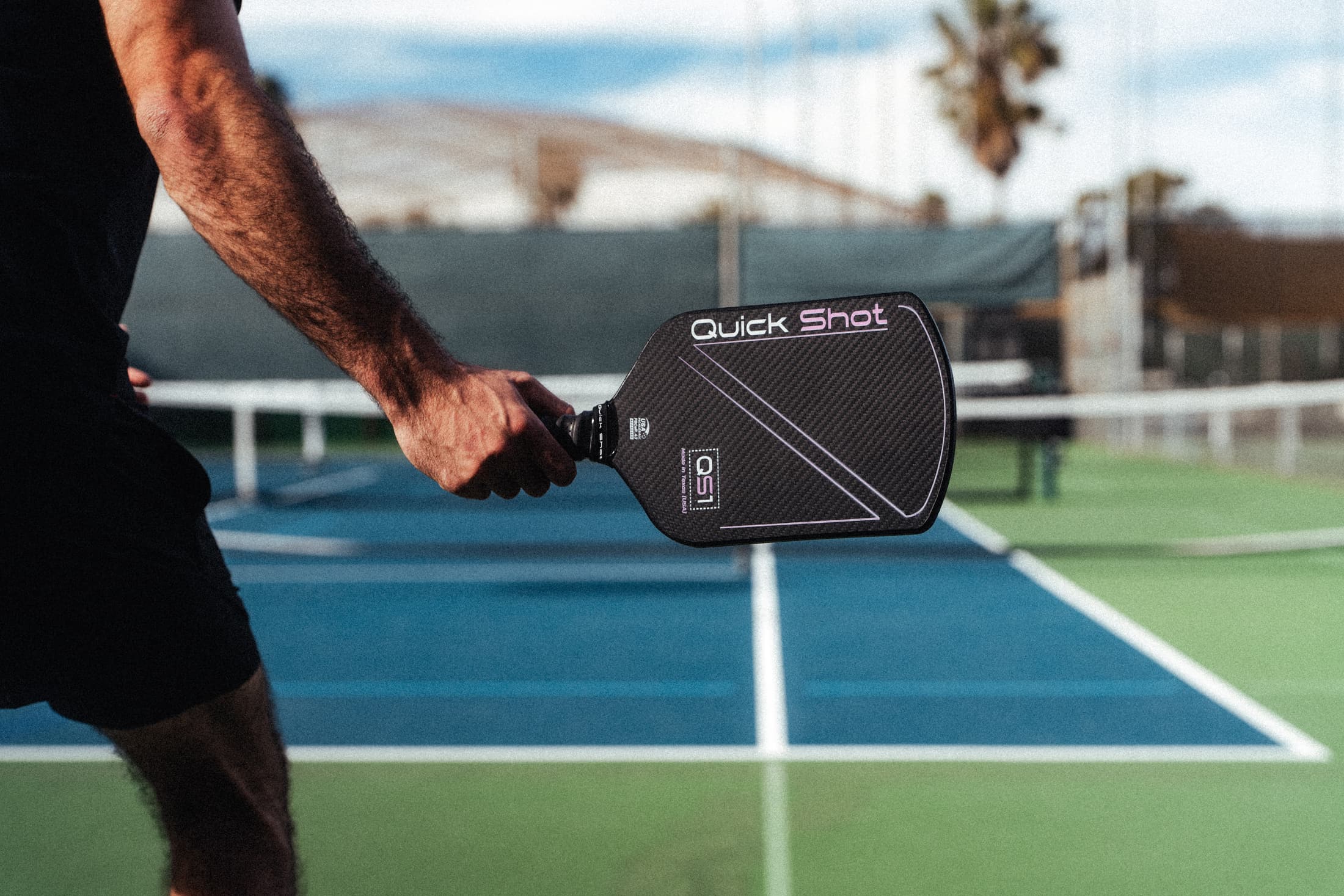
Elongated: 16.5" × 7.5"
The paddle you see on the pro tour. Longer face, narrower width, sweet spot shifted toward the tip. Elongated paddles trade forgiveness for reach and leverage.
Elongated Pros
- Extra reach on serves, overheads, and wide balls
- Higher swing weight = more power on drives
- Longer contact window for generating topspin
- Preferred geometry for singles play
Elongated Cons
- Narrower sweet spot (shifted to the tip)
- Less twist-weight forgiveness on off-center hits
- Slower hand speed at the kitchen line
- Can feel unwieldy for players with smaller frames
Hybrid: 16.25" × 7.75"
The new standard. Hybrid paddles split the difference — a little longer than widebody, a little wider than elongated, with a sweet spot shifted just slightly toward the tip. Most flagship paddles released in 2025–2026 are hybrids.
Hybrid Pros
- 80% of the reach benefit of elongated
- 80% of the sweet-spot forgiveness of widebody
- Versatile for doubles and singles
- Typically the safest upgrade from a beginner widebody
Hybrid Cons
- Jack of all trades, master of none
- Players at the extremes (pure bangers, pure dinkers) may prefer a dedicated shape
Ready to Upgrade Your Game?
Shop premium pickleball paddles, designed and manufactured in the US — carbon fiber faces, honeycomb cores, USA Pickleball approved.
Shop Quick Shot PaddlesHow Shape Interacts with Playing Style
Shape is not just about reach — it changes where on the paddle you make contact. Elongated paddles encourage you to meet the ball out in front with more extension. Widebodies encourage a more compact swing closer to your body. Neither is better; they are different.
Players coming from tennis typically prefer elongated (feels closest to a racquet). Players coming from ping pong or racquetball usually prefer widebody (quicker punches). Players coming straight to pickleball from no racquet background tend to do best with hybrid.
Shape and Two-Handed Backhands
If you use or want to develop a two-handed backhand, you need a longer handle (5.5"+), which is easier to fit on an elongated or hybrid shape. Widebody paddles with short handles can make two-hand play cramped.
Handle length tends to correlate with shape choice. Our guide on grip size and handle length explains the interaction.
Our Pick
For 80% of the players who ask us this question, we recommend a hybrid shape with a 16mm core. It is the shape that lets the most people play their best tennis on day one without forcing them to adapt to an extreme geometry. Extremists on either end — pure power or pure finesse — should chase their respective shape.
If you still have not locked down your core thickness, read 14mm vs 16mm paddle cores next — shape and core thickness pair together.
?Frequently Asked Questions

Co-founder and lead play-tester at Quick Shot Paddles. Sets the performance bar for every paddle before it ships.