Foam Core vs Honeycomb Core Paddles: The Gen 4 Revolution Explained
The biggest story in pickleball paddle engineering over the last two years has been the shift from polypropylene honeycomb cores to dense foam cores — what most of the industry now calls "Gen 4" construction. If you have seen paddles marketed with terms like MPP foam, propulsion core, or multi-density foam core, those are all variants of the same idea. Here is what is actually happening inside the paddle and why it matters.
How Traditional Honeycomb Works
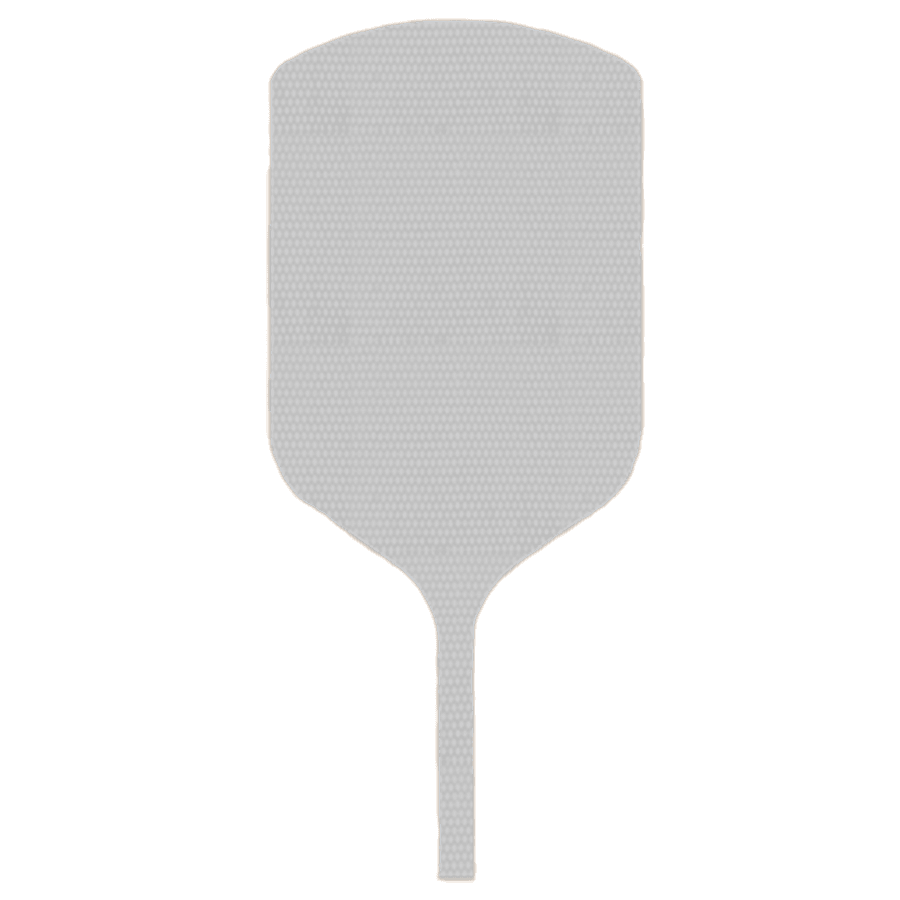
The honeycomb core most paddles use is a sheet of polypropylene plastic formed into a hexagonal cell structure — identical geometry to a beehive for the same reason (maximum stiffness for minimum weight). When the ball impacts the face, the cells compress individually, absorbing energy, then rebound to return that energy to the ball.
Our deep dive on honeycomb core technology covers this in full. The short version: honeycomb works extremely well, is inexpensive to manufacture, and has been the industry standard for a decade.
Why Engineers Looked for Something Else
Honeycomb has three weaknesses:
- Cell crush. Individual cells eventually deform permanently under repeated high-impact hits, creating dead spots.
- Uneven response. The grid of cells is discrete, not continuous. Impact exactly over a cell wall feels slightly different from impact over the open center of a cell.
- Dwell time ceiling. Honeycomb cells resist compression quickly, which caps how long the ball stays on the paddle — a limit on how much control you can generate.
Enter Foam Cores
A foam core replaces the hex cells with a continuous block of densified polymer foam — typically a closed-cell structure where the entire volume deforms under impact, not discrete cells. Manufactured correctly, this gives three advantages:
- Longer dwell time. The foam compresses and rebounds more slowly than honeycomb, giving you more time to influence the ball with spin and angle.
- Bigger effective sweet spot. Because the foam responds continuously, the entire paddle face behaves more uniformly — off-center hits feel closer to center hits.
- Higher durability ceiling. No discrete cells to crush individually means failure happens gradually (slight energy return loss) rather than catastrophically (sudden dead spots).
The Trade-Offs
Foam cores are not magic. They cost more, weigh more, and have their own feel — some players don't like the plushness. Common complaints from traditionalists:
- Foam paddles can feel "muted" — less of the crisp feedback a thin honeycomb provides.
- The extra dwell time requires technique adjustment. If you are used to hitting short, reactive shots, a foam paddle feels slower.
- Pricing: flagship foam core paddles often sit in the $200–$280 range, versus $130–$200 for top-tier honeycomb.
Foam is an evolution, not a wholesale replacement. Honeycomb still wins on pure crispness, and for players who like immediate feedback, it is not going anywhere.
Varieties of Foam Core
Not all foam cores are built the same. Three architectures are common in 2026:
- Single-density foam: a uniform foam block across the paddle. Simple, consistent feel.
- Multi-density / zoned foam: different foam densities in different regions of the paddle (softer toward the sweet spot, firmer at the tip for drive power). More forgiving, more expensive to build.
- Foam-over-honeycomb hybrids: a foam layer on top of a thin honeycomb backbone. Attempts to balance crispness and dwell.
Ready to Upgrade Your Game?
Shop premium pickleball paddles, designed and manufactured in the US — carbon fiber faces, honeycomb cores, USA Pickleball approved.
Shop Quick Shot PaddlesOur R&D Work on Foam
We are actively developing a foam-core paddle in our Texas workshop. The engineering challenge is not just selecting a foam — it is pairing the right foam density with the right carbon fiber face stiffness, press pressure, and edge geometry so the paddle plays consistently across all contact zones.
What we are targeting: a foam core paddle that keeps the raw 3K Twill carbon fiber face for spin, extends dwell time meaningfully over our 16mm honeycomb, and survives 18+ months of heavy play without the feel degradation common in early-generation foam paddles. We will announce release details on the blog and to the Quick Shot mailing list when it is ready.
Should You Buy a Foam Core Paddle Now?
Foam is real technology, not a marketing gimmick. If you are a 4.0+ player, play 4+ times a week, and have the budget for a $220+ paddle, a quality foam core is a legitimate upgrade. For everyone else — and for players who value crisp feel — a well-built 16mm honeycomb paddle is still excellent and will be for years.
If you want to understand the other variables that matter at purchase time, start with our full best pickleball paddle 2026 guide.
?Frequently Asked Questions

Lead engineer behind every Quick Shot paddle. Writes about materials, construction, and the engineering behind high-performance paddles.