Mastering the Third-Shot Drop in Pickleball
Learn the step-by-step technique for an effective third-shot drop to control the point and get to the net in pickleball.

5 min read
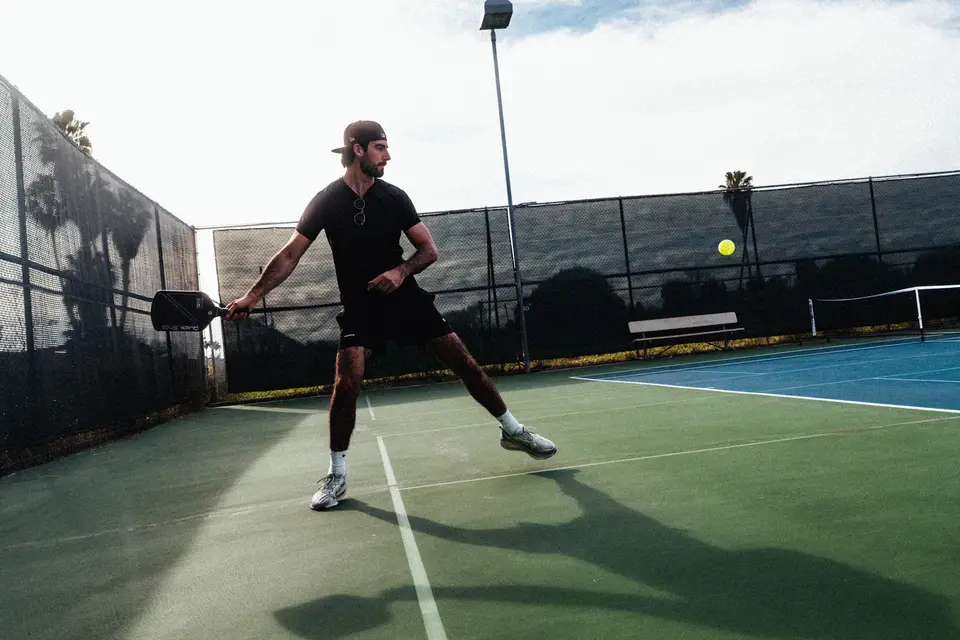
The third-shot drop is a core skill in pickleball. It is a soft shot hit from the baseline, designed to land softly in the opponent’s kitchen (non-volley zone). The goal is to force your opponents to hit up on the ball, allowing you and your partner to move from the baseline to the net, gaining an offensive position.
What is a Third-Shot Drop?
The third shot in a rally is the one hit by the serving team after the return of serve. A third-shot drop is a specific type of third shot. Instead of driving the ball hard, you aim for a gentle arc that drops into the opponent’s kitchen. This neutralizes their aggressive return and gives your team time to advance. It changes a defensive position into an offensive opportunity.
Why the Third-Shot Drop Matters
Controlling the net is a big advantage in pickleball. The team at the net can hit downward angles and volleys. The third-shot drop is the most reliable way to get to the net after serving. Without a consistent drop, you stay at the baseline. This puts you at a disadvantage against players who can control the net. A good drop helps you dictate the pace of the rally.
Setting Up for Success
Proper preparation makes the drop shot easier to execute.
Footwork and Body Position
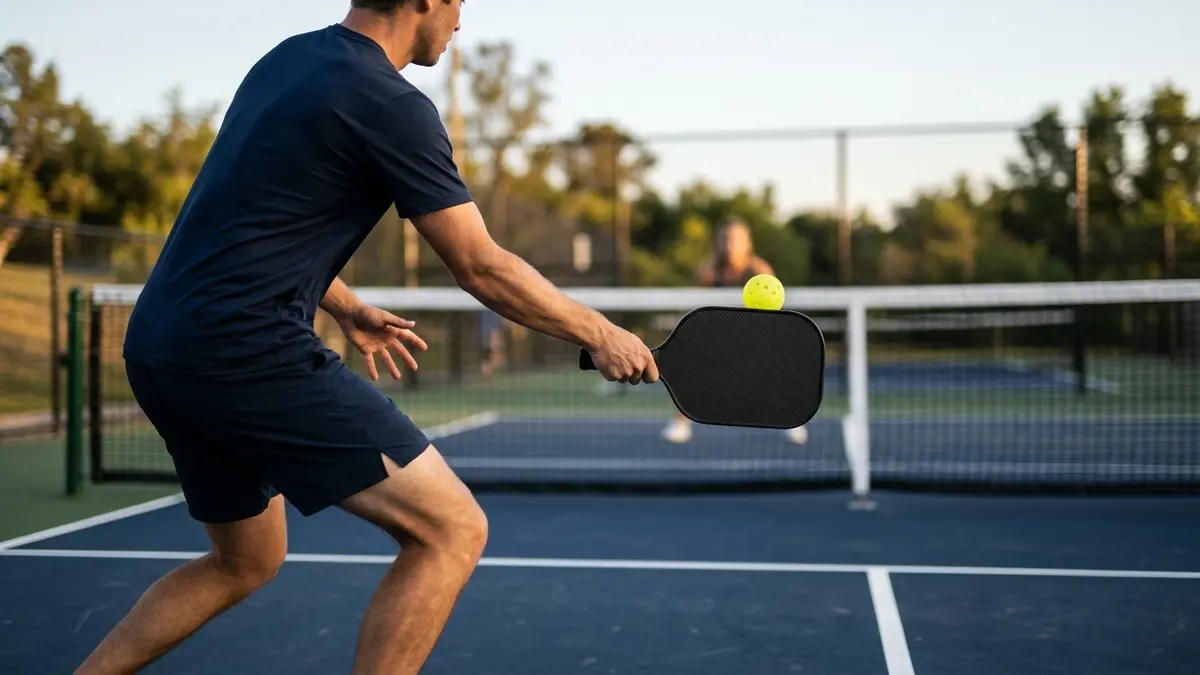
After your partner serves and the return is hit, move your feet. Get behind the ball. Your body should be angled towards the net, ready to move forward after the shot. Bend your knees. Stay low. This helps you get under the ball and generate the upward trajectory needed for the drop.
Grip and Paddle Face Angle
Use a continental grip. This grip allows for flexibility in paddle face angle. For a drop, you want the paddle face open, angled slightly upwards. This helps lift the ball over the net. Think of it like a soft push, not a hard swing. Your non-hitting hand can help balance you and track the ball.
Executing the Drop
The actual stroke is about control and feel.
The Soft Touch
This is not a power shot. Your arm movement should be minimal. Use your wrist and forearm for control. Imagine cradling the ball and lifting it gently over the net. The motion comes more from your legs and core lifting through the ball, rather than a big arm swing.
Contact Point
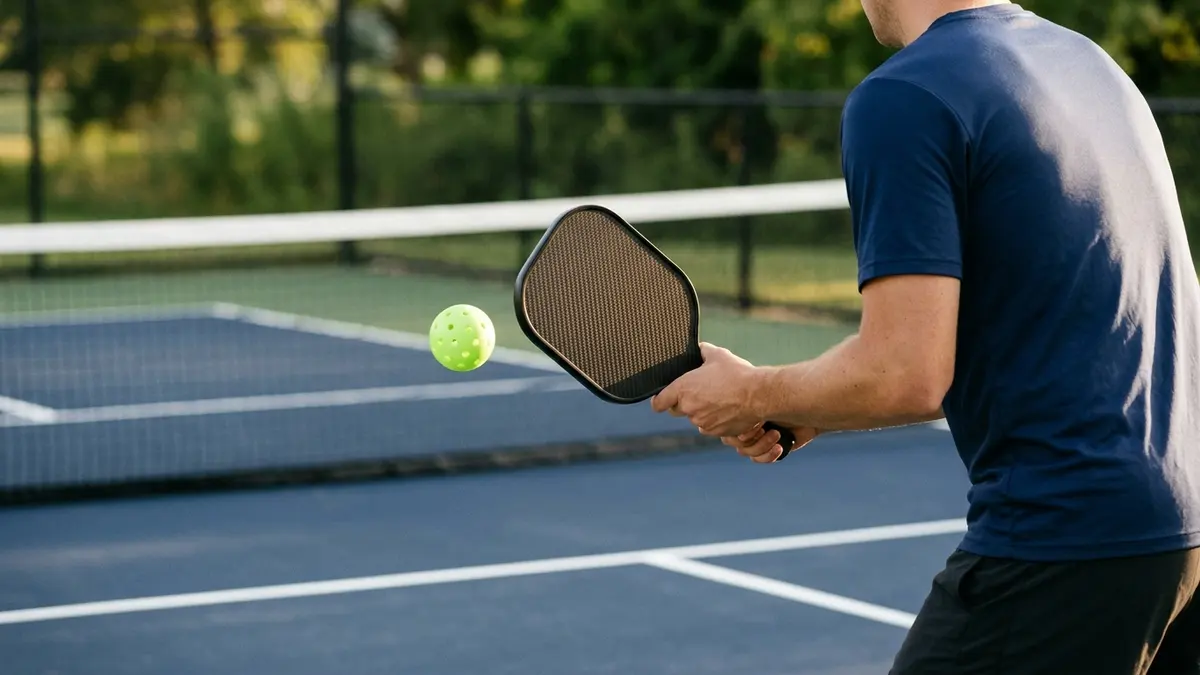
Aim to make contact with the ball in front of your body and slightly below net height. This allows you to brush up on the ball, creating backspin or no spin, which helps it stop quickly in the kitchen. Hitting the ball too far back or too high will send it deep or out.
Using Your Paddle for Control
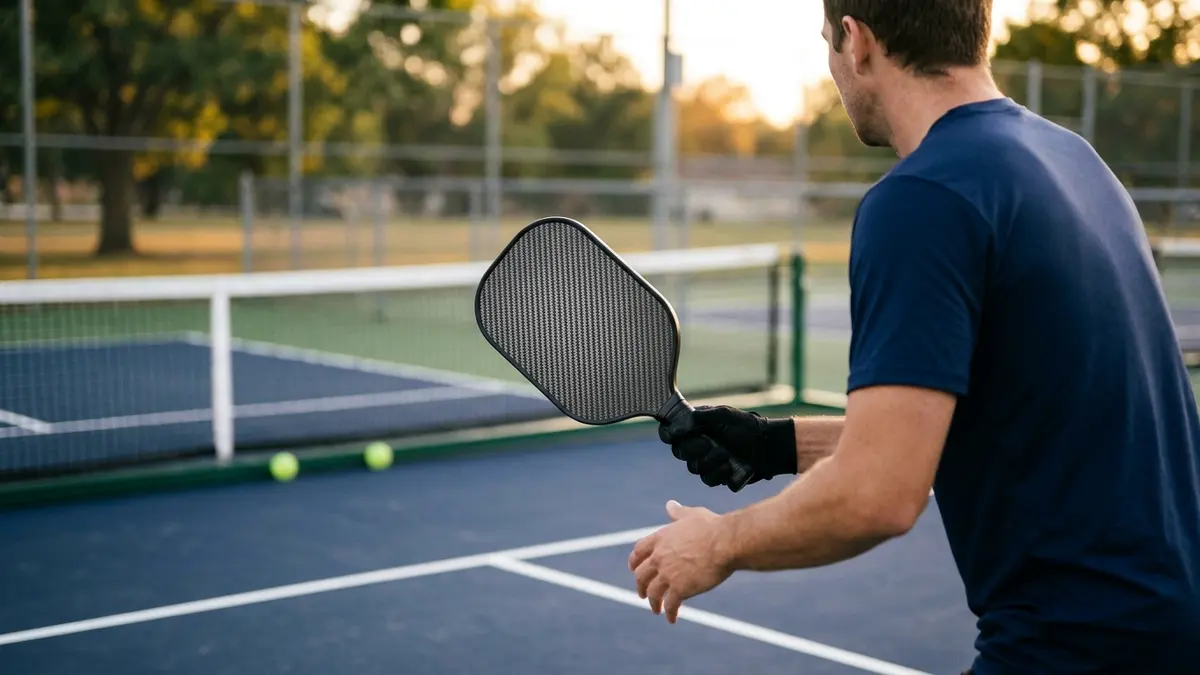
Your paddle plays a role in control. The QS1 in Blue and QS1 in Pink feature a raw 3K twill carbon fiber face. This textured surface helps grip the ball, allowing for better control and spin generation on delicate shots like the drop. The 14mm polypropylene honeycomb core also provides a good feel, which is important for judging the touch needed for a soft drop. This combination helps you place the ball precisely. You can learn more about how paddle faces affect your game in our guide on Raw Carbon Fiber Paddle Faces: Spin and Control Explained.
The Follow-Through and Net Rush
After making contact, your paddle should follow through towards your target. Keep your eyes on the ball. Immediately after hitting the drop, move forward with your partner towards the non-volley zone line. This is the ‘net rush’ part of the shot. You want to be at the kitchen line when your opponents hit their next shot.
Drills to Improve Your Drop
- Baseline to Kitchen: Stand at the baseline with a bucket of balls. Practice hitting drops into the kitchen. Focus on consistency and depth.
- Live Ball Drop: Have a partner hit returns of serve to you. Practice hitting live third-shot drops, then immediately rushing the net.
- Target Practice: Place cones or targets in the kitchen to aim for. This helps improve your precision.
Common Third-Shot Drop Mistakes
- Hitting too high: The ball arcs too high, giving opponents an easy put-away shot.
- Hitting too deep: The ball lands outside the kitchen, allowing opponents to hit it aggressively.
- Not getting low enough: You hit the ball with an upright posture, making it harder to get under it.
- Too much power: Treating it like a drive, resulting in a hard shot that bounces high.
- Not rushing the net: Hitting a good drop but staying at the baseline, losing the advantage.
Improving your third-shot drop takes practice. Focus on consistent technique, soft hands, and a clear understanding of the shot’s purpose. It is a strategic shot that can transform your game.
The short version
- Get low and behind the ball with an open paddle face.
- Use a soft, upward stroke, contacting the ball in front and below the net.
- Leverage your paddle’s textured face and responsive core for control.
- Immediately follow your shot to the net with your partner.
- Practice regularly to build consistency and confidence.
Find the right paddle for your control game in our shop.
FAQs
Q: What is the ideal landing spot for a third-shot drop? A: The ideal landing spot is just over the net, within the first few feet of the opponent’s non-volley zone (kitchen). This forces them to hit up on the ball, making it difficult for them to generate power or deep placement, giving you time to get to the net.
Q: How do I know if I’m hitting the ball with too much power? A: If your third-shot drop is bouncing high after it lands, or if your opponents are consistently able to hit aggressive returns, you are likely using too much power. Focus on a softer touch, less arm swing, and letting the paddle’s face and core do the work of cushioning the ball.
Q: Should I use spin on my third-shot drop? A: Backspin can be effective on a third-shot drop as it causes the ball to slow down and stay low after it bounces. However, control is more important than heavy spin. Focus on a clean, soft contact that lifts the ball, and allow any natural backspin from the upward stroke to assist the shot. Your paddle’s raw carbon fiber face can naturally help generate this spin.
Frequently asked questions
What is the ideal landing spot for a third-shot drop?
The ideal landing spot is just over the net, within the first few feet of the opponent's non-volley zone (kitchen). This forces them to hit up on the ball, making it difficult for them to generate power or deep placement, giving you time to get to the net.
How do I know if I'm hitting the ball with too much power?
If your third-shot drop is bouncing high after it lands, or if your opponents are consistently able to hit aggressive returns, you are likely using too much power. Focus on a softer touch, less arm swing, and letting the paddle's face and core do the work of cushioning the ball.
Should I use spin on my third-shot drop?
Backspin can be effective on a third-shot drop as it causes the ball to slow down and stay low after it bounces. However, control is more important than heavy spin. Focus on a clean, soft contact that lifts the ball, and allow any natural backspin from the upward stroke to assist the shot. Your paddle's raw carbon fiber face can naturally help generate this spin.