Best Pickleball Paddle Under $200 in 2026: Real Performance, Honest Price
$200 is the dividing line in pickleball paddles. Below it, you're in the recreational-to-serious gray zone where materials and construction can be great or can be sneaky-cheap. Above it, you're paying for incremental gains that most players can't feel. This guide tells you what to expect in the under-$200 tier, what to avoid, and which paddles actually deliver at the price.
What You Should Expect at Under $200
Materials
- Raw 3K Twill carbon fiber face. Non-negotiable in 2026. If it's not here, walk away.
- Polymer honeycomb core, typically 14mm or 16mm thick.
- Cushioned perforated grip with decent replacement-friendliness.
- Quality edge guard or hybrid edge — not a cheap plastic glue-on that chips within a month.
Construction
- A well-bonded cold-pressed build (not core-crush-prone heavy thermoforming)
- USA Pickleball approved
- A real warranty (30–90 days minimum)
Performance
- 1,600+ RPM on topspin drives
- Consistent sweet-spot response for 12–18 months of regular play
- No buzz, rattle, or dead spots out of the box
What to Avoid Under $200
- Painted "carbon" faces. If the face has a glossy clearcoat or decorative paint, spin is gone.
- Unbranded fiberglass. Fiberglass paddles aren't inherently bad, but generic ones at $150+ are overpriced for the materials.
- Heavy thermoformed paddles from the Gen 3 era. Some are still being discounted. Core crush is a real risk. See our thermoformed paddle guide.
- No-name direct imports. Amazon is full of them. Warranties are nonexistent, materials are inconsistent.

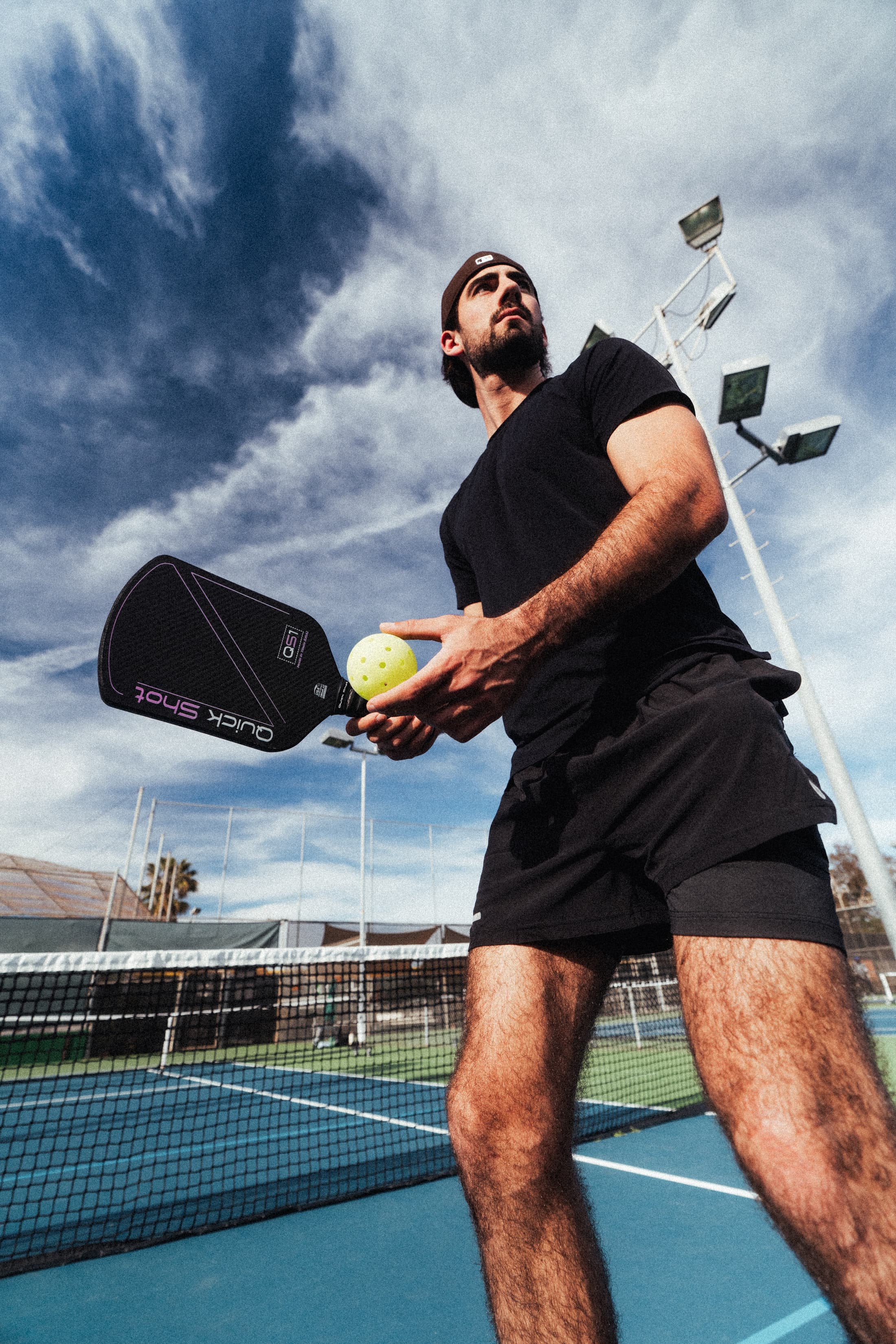
Our Pick: The Quick Shot QS1
The QS1 is our answer to "why do premium paddles cost $300?" Every serious spec is there — raw 3K Twill carbon fiber, 16mm polypropylene honeycomb core, hybrid edge geometry, NFC-embedded handle, USA-built with real warranty support — at a price well under $200.
How we get there: we sell direct from our workshop. No retail distribution markup. No influencer contract budget. No out-of-proportion marketing spend. The cost savings go straight into either better materials or lower retail price — both, in our case.
Other Legitimate Contenders
A few other paddles in this tier that we respect:
- CRBN base lines: solid raw carbon, well-respected build, priced at the top of the under-$200 window.
- Selkirk entry-premium: quality materials, strong warranty support, tends to sit at $180–$200.
- Engage Pursuit MX: long-running model, decent value, consistent construction.
We are not going to pretend ours is the only good option. What we will say is that if you compare specs line-by-line across brands in the $150–$200 range, Quick Shot stacks up against any of them — and usually wins on price, grit retention, and warranty turnaround.
When to Spend More Than $200
Three scenarios where going above $200 makes sense:
- You are a 4.5+ DUPR player who can extract the 2–3% improvement from a flagship paddle.
- You are specifically buying a foam-core Gen 4 paddle. Current foam core construction has legitimate technology costs. See our foam vs honeycomb guide.
- Competitive tournament play where a specific feature (e.g., ultra-coarse grit, extreme elongation) is what you need.
Outside of these, the extra money is mostly going to marketing.
Ready to Upgrade Your Game?
Shop premium pickleball paddles, designed and manufactured in the US — carbon fiber faces, honeycomb cores, USA Pickleball approved.
Shop Quick Shot PaddlesThe Honest Value Math
A $180 premium paddle lasting 18 months = $10 per month of elite performance.
A $60 budget paddle lasting 6 months (shorter lifespan, face wears down, core crushes faster) = $10 per month of mediocre performance.
Per month of play, premium paddles cost about the same as budget paddles, but you get better spin, better feel, and fewer frustrations along the way. That's why we pricing the QS1 where we do: the math pencils out, and you actually get what you pay for.
For a broader walkthrough of every paddle variable, see the full best pickleball paddle 2026 guide.
?Frequently Asked Questions

Co-founder and lead play-tester at Quick Shot Paddles. Sets the performance bar for every paddle before it ships.