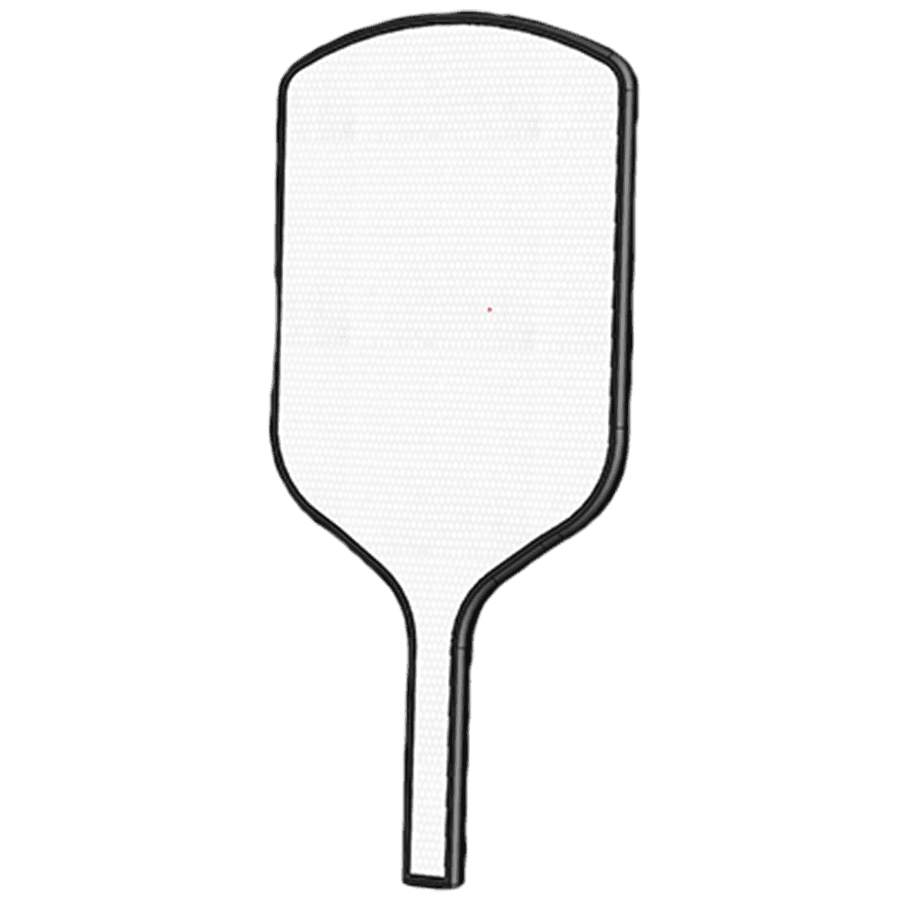
Elongated vs Wide Body Pickleball Paddle: Which Shape Is Right for Your Game?
Paddle shape has become one of the most talked-about specs in pickleball gear discussions — and for good reason. The shape you choose affects reach, sweet spot size, power generation, and how your paddle performs in every situation from baseline drives to kitchen exchanges.
This guide gives you a clear, no-jargon comparison so you can make the right call for your playing style and format.
The Basic Dimensions
USA Pickleball rules set the maximum combined paddle length and width at 24 inches, with length not exceeding 17 inches. This constraint is what creates the elongated vs wide body trade-off:
- Wide body (standard): Typically around 15.5–16 inches long × 8–8.5 inches wide. More width = larger hitting surface = bigger sweet spot.
- Elongated: Typically 16.5–17 inches long × 7–7.5 inches wide. More length = more reach = more leverage = longer handle for two-handed strokes.
- Hybrid / teardrop: Roughly 16–16.5 inches long × 7.75–8.25 inches wide. Aims to split the difference between the two.
Wide Body Paddle: Strengths and Weaknesses
Strengths
- Larger sweet spot. The wider face means more forgiveness on off-center hits. This translates directly to consistency — especially important at the kitchen line where exchanges are fast and contact points vary.
- Faster hand speed at net. Less rotational inertia (lower twist weight) means the paddle moves more quickly in tight kitchen battles and counters.
- Better for doubles specialists. Doubles pickleball is dominated by the kitchen game. The wide body excels in the role most relevant to doubles play.
Weaknesses
- Less reach. On wide balls and cross-court shots, you have less paddle to extend toward the ball.
- Less leverage on drives. Shorter overall length means less mechanical advantage when generating power from the baseline.
- Less effective two-handed backhand. Shorter handle length limits grip real estate for a two-handed stroke.
Elongated Paddle: Strengths and Weaknesses
Strengths
- More reach. An extra inch or two of length regularly turns would-be winners into makeable shots — especially in singles where court coverage is a premium.
- More power and spin from the baseline. Greater length creates more paddle-head speed at the point of contact, which translates to more pace and topspin potential.
- Two-handed backhand friendly. The longer handle comfortably accommodates two-hand grip, which many players transitioning from tennis prefer.
Weaknesses
- Smaller sweet spot. The narrower face is less forgiving. Mishits are punished more, especially on quick kitchen exchanges.
- Slower at the net. Higher swing weight means less reactivity in firefights. Some players compensate with a lighter overall paddle weight to preserve hand speed.
- More technique-dependent. The power benefits of an elongated paddle only show up when your footwork and contact point are consistent. On a day when your footwork is off, the narrow face penalizes you.
Which Shape Is Best for Singles?
Elongated is the dominant choice in singles. Here is why:
- You are covering the full court alone — reach matters on every wide ball.
- Singles involves more baseline rally play where power and spin from length are decisive.
- Kitchen exchanges are less constant than in doubles, so the smaller sweet spot is less of a liability.
Most competitive singles players at the 4.0+ level use elongated or hybrid shapes. Below 3.5, the consistency benefit of a wide body may still outweigh the reach advantage — evaluate your own consistency honestly.
Which Shape Is Best for Doubles?
Wide body is the classic doubles choice, but the picture is more nuanced in 2026:
- Players who play a banging, transition-zone style often prefer elongated even in doubles because the power advantage at mid-court outweighs the net-play disadvantage for their specific game.
- Dink-heavy, kitchen-first players almost always prefer wide body for the larger sweet spot and faster hands.
- Mixed doubles and recreational doubles players — wide body, without question. The consistency benefit at rec-level doubles is clear.
What About Hybrid Shapes?
Hybrid and teardrop shapes are increasingly popular among players who do not want to commit fully to either extreme. If you play both singles and doubles competitively, or you value versatility over peak performance in one format, a hybrid is worth considering. The trade-off is that you get most of the benefits of both with the full premium of neither.
QuickShot Options by Shape
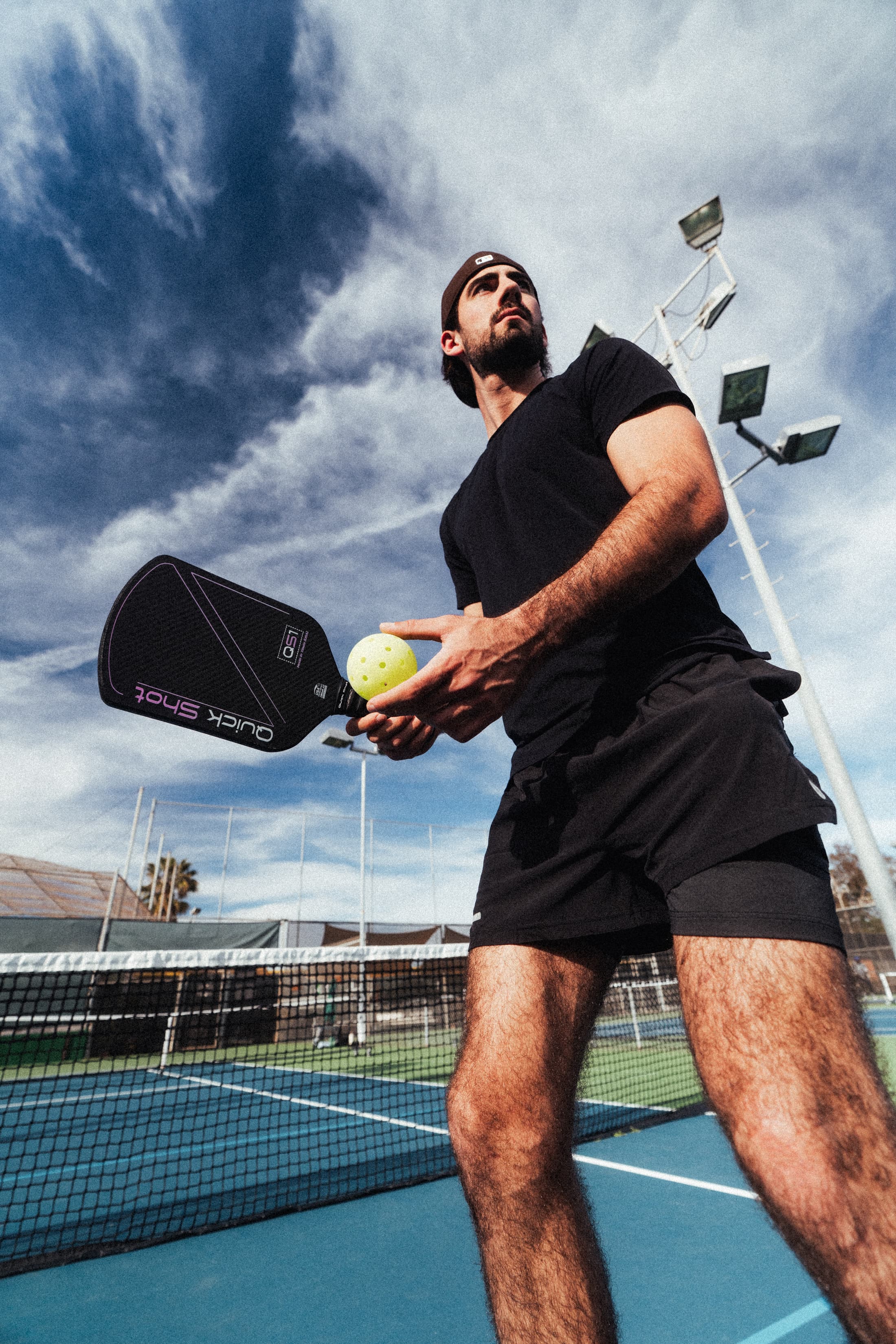
The Quick Shot QS1 is built as a hybrid body — deliberately designed to give you the best of both shapes in one paddle. You get the forgiveness and kitchen speed of a widebody sweet spot combined with the reach and leverage of an elongated frame. It runs a 14mm honeycomb polymer core, raw 3K Twill carbon fiber face, and the proprietary vibration-dampening 3D printed grip that keeps arm fatigue low across long sessions. If you have been going back and forth between shapes, the QS1 hybrid is worth trying before committing to either extreme.
See it at quickshotpaddles.com.
Ready to Upgrade Your Game?
Shop premium pickleball paddles, designed and manufactured in the US — carbon fiber faces, honeycomb cores, USA Pickleball approved.
Shop Quick Shot PaddlesHow to Decide: A Two-Question Test
- Do you play more singles or doubles? Doubles → wide body default. Singles → elongated default.
- Is your game more kitchen-focused or baseline-focused? Kitchen-first → wide body. Baseline / power-first → elongated.
If both answers point the same direction, your choice is clear. If they conflict — for example, you play mostly doubles but love driving from mid-court — a hybrid shape is worth demoing. The spec overlap in our swing weight and twist weight guide will also help you understand how shape interacts with feel.
?Frequently Asked Questions

Co-founder and lead play-tester at Quick Shot Paddles. Sets the performance bar for every paddle before it ships.