Pickleball Paddle Edge Guards: Traditional, Hybrid & Edgeless Compared
The edge of a paddle is the most vulnerable part of the whole build. Ground scrapes, paddle collisions, and the occasional bench tap all hit the edge first. How a paddle handles those impacts depends on what kind of edge construction it uses. Here are the three main approaches and why we picked the one we did.
1. Traditional Plastic Edge Guard
The classic. A molded plastic strip — usually ABS or polyurethane — wraps the perimeter of the paddle and is glued to the core and face edges. This was the only approach in pickleball for years.
Pros
- Inexpensive to manufacture
- Protects the exposed core from moisture and dirt
- Easy for the brand to replace during warranty service
- Absorbs edge impacts without propagating damage into the face
Cons
- Adds 5–10 grams to the paddle
- Can peel off over time, especially at the top edge
- Creates a visual "cheap plastic" aesthetic
- Sometimes transmits a vibration dead spot where the edge meets the face
2. Edgeless / Unibody (Thermoformed)
Instead of a separate edge guard, the face material (carbon fiber) wraps around the entire perimeter and is fused into a single piece through heat and pressure. This has been the dominant aesthetic since 2023.
Pros
- Sleek aesthetic, no plastic strip
- Structurally rigid — adds stiffness (and power)
- No peeling edge guard problem
- Slightly lighter than traditional edge guards
Cons
- Exposed carbon fiber at the edge — visible chips from ground contact
- Chips can propagate into face delamination if deep enough
- No replaceable part — damage is permanent
- Typically pairs with thermoformed construction, which has core crush issues (see our thermoformed paddle guide)

3. Hybrid Edge (Our Approach)
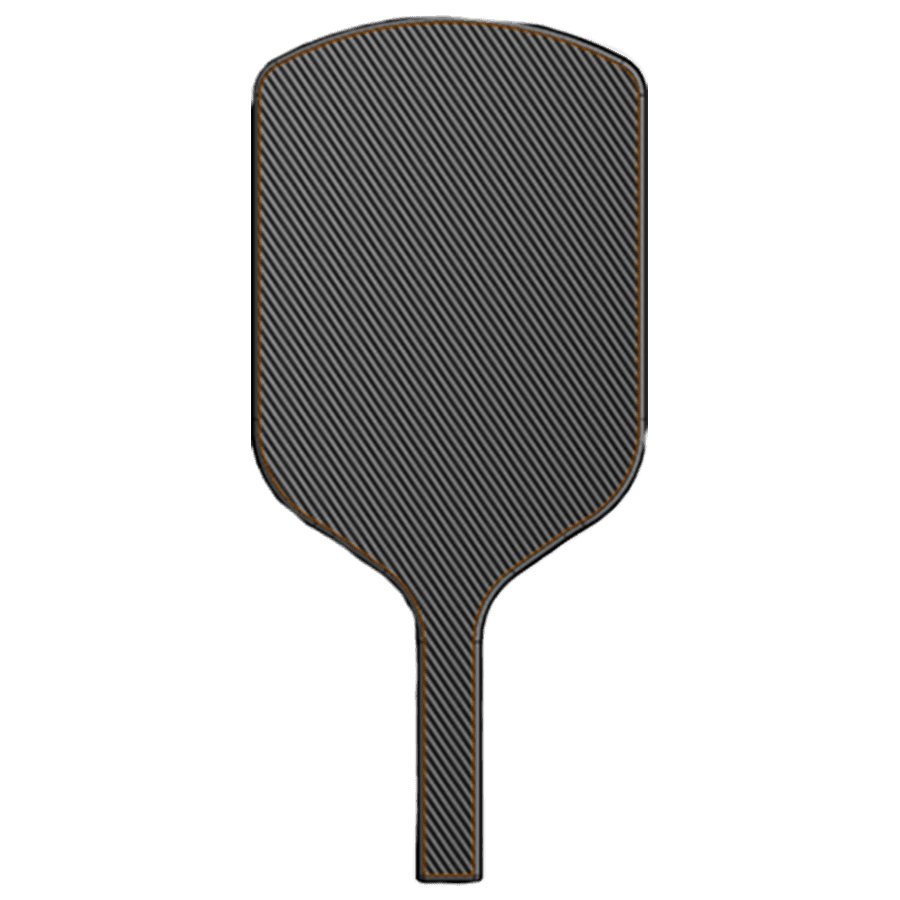
The hybrid edge is what we designed for Quick Shot paddles. It combines a structural edge geometry with a thin protective layer. Face material wraps partway around the edge (for stiffness), with an inset protective element that shields the exposed corner without adding a bulky plastic strip.
Pros
- No bulky plastic edge guard — lighter and cleaner looking
- No fully exposed carbon fiber at the strike zone
- Inset protection absorbs ground strikes before they propagate
- Works with traditional cold-press construction (no core crush issue)
Cons
- More complex to manufacture — higher unit cost
- Less "warranty replaceable" than plastic guards — requires in-workshop repair
The Edge Tape Upgrade
Regardless of which edge type you have, edge tape is a universally useful accessory. Brands like Unique Sports and Gamma make thin adhesive-backed tape specifically for pickleball edges. You apply it over the existing edge, it absorbs scuffs and minor chips, and when it looks bad you peel and replace — usually costs $5–$10 for a roll.
At Quick Shot, we offer edge tape as a free add-on option at checkout, because we think it should be standard practice.
What Actually Causes Edge Damage
Three failure modes, in order of frequency:
- Court strikes. Reaching for a low ball and dragging the paddle on the court. Every pickleball player does this eventually.
- Paddle collisions. Two players on the same team both lunging for the ball. Or banging paddles at the kitchen post-point.
- Transport damage. Paddle bouncing around in a gym bag with shoes and water bottles.
The best way to extend edge life: use a paddle cover during transport, and try to keep the paddle elevated off the court when reaching.
Ready to Upgrade Your Game?
Shop premium pickleball paddles, designed and manufactured in the US — carbon fiber faces, honeycomb cores, USA Pickleball approved.
Shop Quick Shot PaddlesShould the Edge Design Drive Your Purchase?
Not alone. Edge design is a small factor in the overall paddle decision. Face material, core thickness, and weight matter far more for how the paddle plays. But all else equal, we'd pick in this order:
- Hybrid edge (best overall durability and feel)
- Traditional plastic edge guard (protective, cheap, proven)
- Edgeless thermoformed (sleek but comes with trade-offs)
Our Hybrid Edge Explained
The hybrid edge on every Quick Shot paddle was engineered in our Texas workshop after trying both traditional and thermoformed approaches. We wanted the clean aesthetic of an edgeless paddle with the protection of a traditional edge guard — and without the weight penalty of either. The full construction process is covered in how we build Quick Shot paddles.
?Frequently Asked Questions

Lead engineer behind every Quick Shot paddle. Writes about materials, construction, and the engineering behind high-performance paddles.