Pickleball Paddle Care: How to Clean & Maintain a Raw Carbon Fiber Face
A well-made paddle can give you two years of elite performance — if you treat it right. Most players kill their paddles early through three mistakes: leaving them in hot cars, ignoring face cleaning, and storing them unprotected. This is the full maintenance protocol we send every customer.
After Every Session
Two minutes of care after each play:
- Wipe the face with a damp microfiber cloth. Sweat, sunscreen, and court dirt leave residue that builds up in the grit texture and kills spin over time.
- Check the edge guard for cracks or lifted sections. Catching a small chip early lets you re-seal it with a drop of super glue before it propagates.
- Slide it into a cover — neoprene, fleece, or a padded sleeve. Never toss a bare paddle into a gym bag with shoes and water bottles.
Weekly: Deep Clean the Face
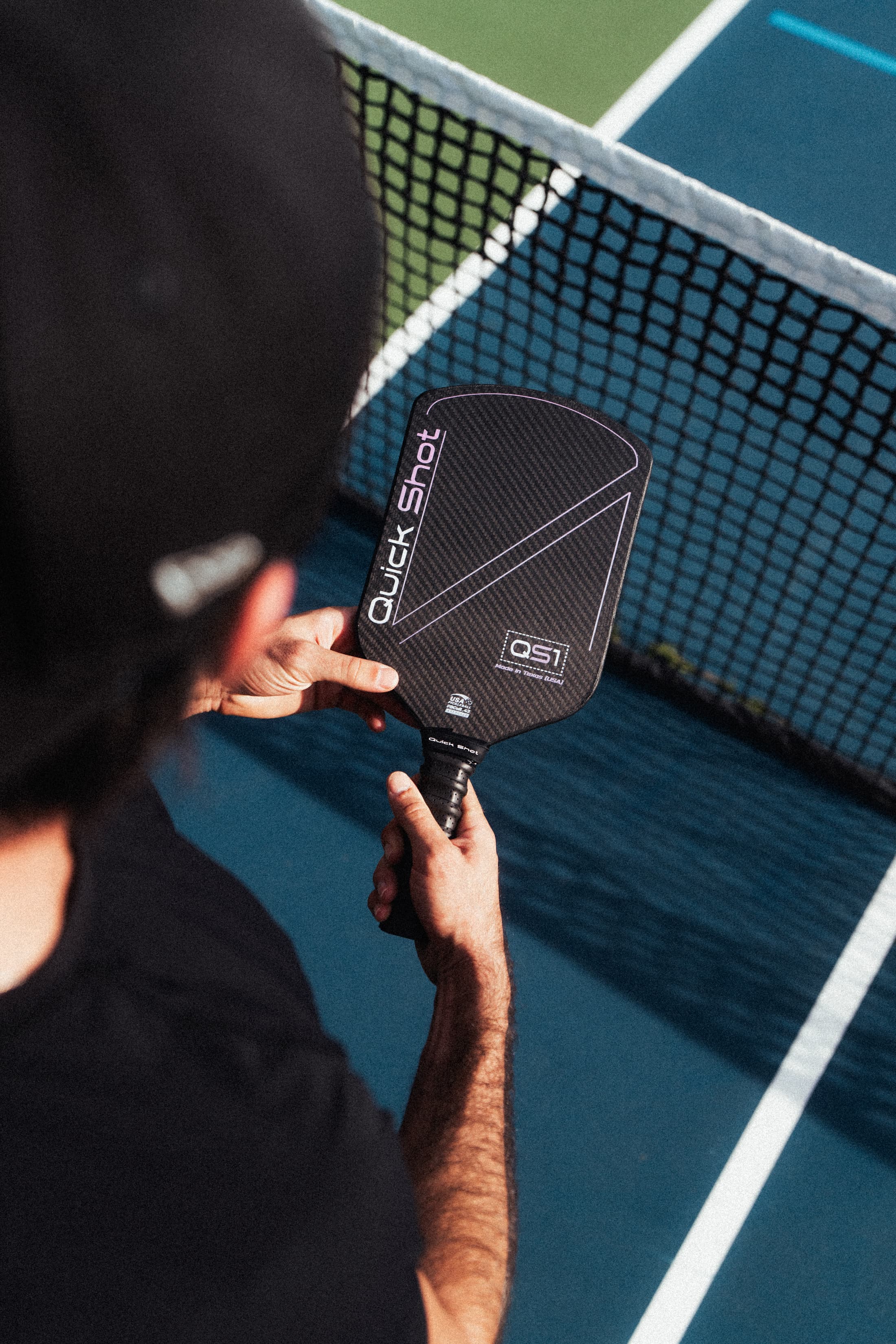
Every 1–2 weeks, give the face a proper clean to restore the grit texture.
- Lightly wet the face with a damp microfiber.
- Gently rub with a Magic Eraser in small circular motions. Don't press hard — the foam abrasive should lift residue, not grind into the carbon fiber.
- Wipe clean with a dry microfiber.
This process removes oxidized oil and restores roughly 80% of the original grip. Do not overuse it — twice a month is plenty. Scrubbing too often or too hard will eventually wear the surface down.
What Not to Use
Skip these "cleaners" entirely:
- Alcohol (isopropyl): strips the epoxy binder, softens the surface.
- Acetone or nail polish remover: will dissolve the resin matrix. Permanent damage.
- Heavy degreasers or spray cleaners: often contain solvents that attack epoxy.
- Sandpaper: people suggest sanding the face to restore grit. It doesn't work — you are removing the carbon fiber itself, not refreshing texture. And it voids the warranty.
Temperature Storage Rules
Heat kills paddles. The epoxy matrix that bonds the face to the core has a glass-transition temperature in the 160–180°F range. Above that, the binder softens, leading to delamination.
Where paddles die:
- Inside a parked car in summer (easily hits 140–180°F)
- On a black asphalt court in direct sun during a long break
- In an uninsulated garage in Arizona / Texas / Nevada summers
Bring the paddle inside when you are not playing. When you are playing, tuck it in a shaded area between games.
Grip Care
The grip is the first thing that visibly deteriorates. When it feels hard, slick, or starts to crack:
- Add a cushioned overgrip on top — cheap, takes 30 seconds, and restores tackiness.
- Once the original grip has hard cracks, have it replaced. This is a quick service at most pro shops or you can DIY with a replacement-grip kit.
For full details on grip sizing and why it matters for arm health, see our grip size guide.
Edge and Surface Protection
The paddle edge is where damage starts. A ground-strike or a paddle-on-paddle collision can chip the edge guard and initiate face delamination.
- Some players add a strip of edge tape (like Unique Sports edge tape) as a sacrificial layer. When it gets chewed up, peel and replace — your edge guard stays pristine.
- If you notice a lifted edge guard section, drop a bead of cyanoacrylate (super glue) under it and clamp with your fingers for 60 seconds.
Ready to Upgrade Your Game?
Shop premium pickleball paddles, designed and manufactured in the US — carbon fiber faces, honeycomb cores, USA Pickleball approved.
Shop Quick Shot PaddlesKnowing When to Retire the Paddle
Even with perfect care, every paddle has a useful lifespan. The signs that it is time for a replacement are covered in our guide on how long a pickleball paddle lasts. Dead spots, face cracks, and a rattling core all mean the paddle is done — no maintenance will bring it back.
Our Maintenance Promise
Because we hand-build every Quick Shot paddle, we know exactly how it was assembled and what the warranty covers. If something goes wrong that shouldn't — premature delamination, factory defects, unusual cracking — email support@quickshotpaddles.com and we'll take care of it. That is one of the real advantages of buying from a small Texas workshop instead of a faceless factory.
?Frequently Asked Questions

Lead engineer behind every Quick Shot paddle. Writes about materials, construction, and the engineering behind high-performance paddles.