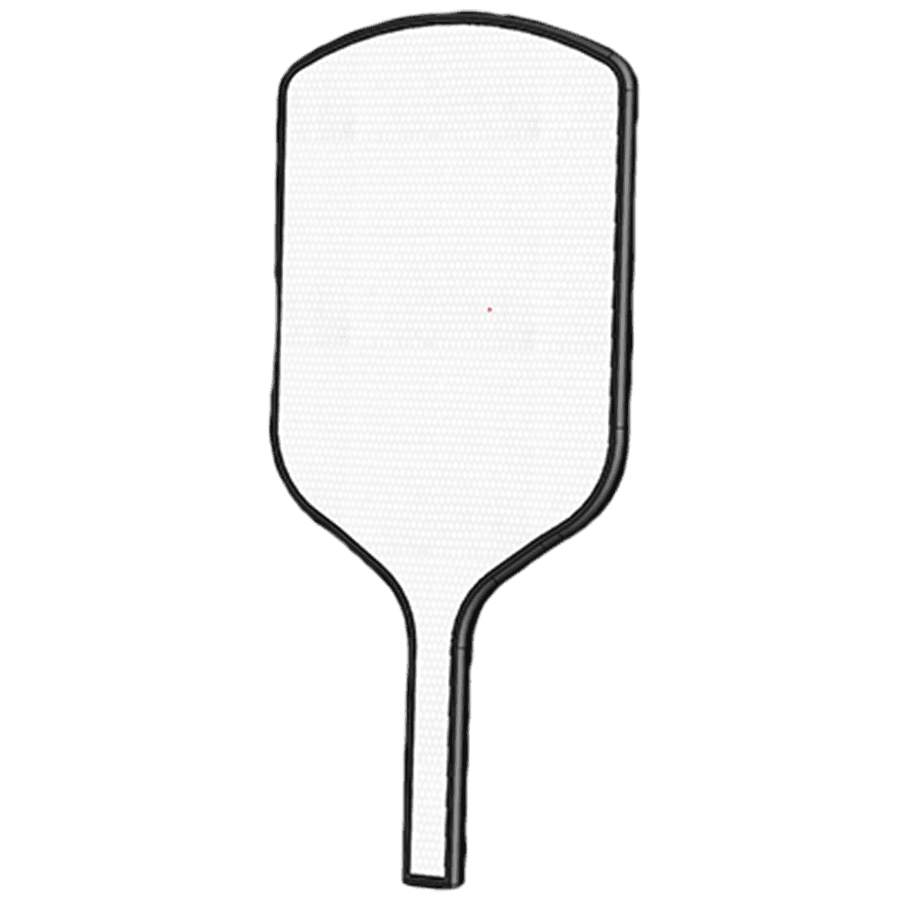
Thermoformed vs Traditional Pickleball Paddles: What's Actually Different?
Browse any pickleball paddle review site in 2026 and you will run into "thermoformed" constantly. It has become one of the most marketed terms in the industry, but the actual explanation of what it means — and whether it matters for your game — is often buried in jargon.
This guide explains thermoforming in plain terms, compares it to traditional (cold-press) construction, and helps you decide whether it is worth considering for your level and playing style.
How Traditional (Cold-Press) Paddles Are Built
Traditional paddle construction — also called cold-press — works like this:
- The core (honeycomb polypropylene or foam) is cut to the paddle shape.
- Face sheets (carbon fiber, fiberglass, or other material) are bonded to each side of the core using a structural adhesive.
- The assembly is pressed together under consistent pressure at room temperature until the adhesive cures.
- The edge guard is applied, the handle is attached, and the paddle is finished.
This is the same basic construction method that has been used in racquet sports for decades. When done correctly with quality adhesive and properly prepared materials, it creates a durable, consistent bond that holds up well over time.
How Thermoformed Paddles Are Built
Thermoforming eliminates the adhesive layer entirely. Here's the process:
- The carbon fiber face sheets are pre-impregnated with a heat-activated resin (rather than a separate adhesive).
- The face sheets and core are assembled together and placed in a mold.
- Heat is applied, activating the resin and causing the face to bond directly to the core as it cures under pressure.
- The result is a single unified structure with no separate adhesive layer between face and core.
The face-to-core integration in a thermoformed paddle is structurally tighter than in a cold-press paddle. This produces a stiffer overall structure, which has meaningful performance implications.
Performance Differences: Thermoformed vs Cold-Press
Power
Thermoformed paddles are generally more powerful. The stiffer face-core bond reduces energy loss at contact — more ball-impact energy is returned to the ball rather than absorbed into the paddle structure. For players who want maximum drive power, thermoformed construction delivers.
Control and Soft Game
Traditional cold-press paddles are generally better for control. The slightly softer face-core interface gives more dwell time on dinks and drops — the ball stays on the face a fraction longer, giving players more ability to shape the shot. For kitchen-first players, this difference is meaningful. Read more about dwell time in our sweet spot guide.
Vibration and Arm Feel
Thermoformed paddles tend to transmit more vibration to the handle due to their stiffer construction. For players managing elbow or wrist issues, this is a real consideration. Cold-press paddles — especially those with thick foam cores like QuickShot's honeycomb foam core construction — absorb more vibration before it reaches the grip. This is why traditional cold-press construction remains the preference for arm-conscious players at all skill levels.
Consistency Over Time
This is where cold-press has a clear practical advantage for most players. Thermoformed paddles can develop edge delamination — where the face begins to separate from the core at the edges — over 3–6 months of heavy play. When this happens subtly, it creates an inconsistent "hot spot" effect that affects shot predictability. The delamination can also push the paddle out of USAP compliance. Cold-press paddles with quality adhesive construction degrade more gradually and predictably. See our paddle lifespan guide.
The Delamination Controversy
The pickleball community has had a heated ongoing debate about thermoformed paddles and delamination. Here is the core of it:
Some thermoformed paddles, when the face begins to separate slightly from the core, effectively become a more powerful paddle than they were when new — the tiny air gap acts like a trampoline. This has led USA Pickleball to remove several thermoformed models from the approved list after they tested out of compliance.
For competitive players: always verify your paddle is on the current USAP approved list before tournament play, especially with thermoformed models. The list is updated regularly. Our 2026 USAP regulations guide has the latest context.
Who Should Consider a Thermoformed Paddle?
Thermoformed construction makes the most sense for:
- Power-oriented players who prioritize drive pace over soft-game feel and are willing to accept a shorter paddle lifespan.
- Players transitioning from tennis who are used to a stiffer, more powerful feel and want maximum pace on groundstrokes.
- Players who replace their paddle every 4–6 months regardless — the delamination concern matters less if you are replacing before it develops.
Who Should Stick With Traditional Construction?
- Kitchen-first and control players — traditional cold-press gives better dwell time and soft-game feel.
- Players with arm or elbow issues — less vibration transmission with quality cold-press construction.
- Tournament players who want long-term compliance — no delamination risk, no surprise disqualifications.
- Players who want a paddle that stays consistent over 12+ months — traditional construction degrades more predictably.
QuickShot's Approach: Traditional Cold-Press + Foam Core
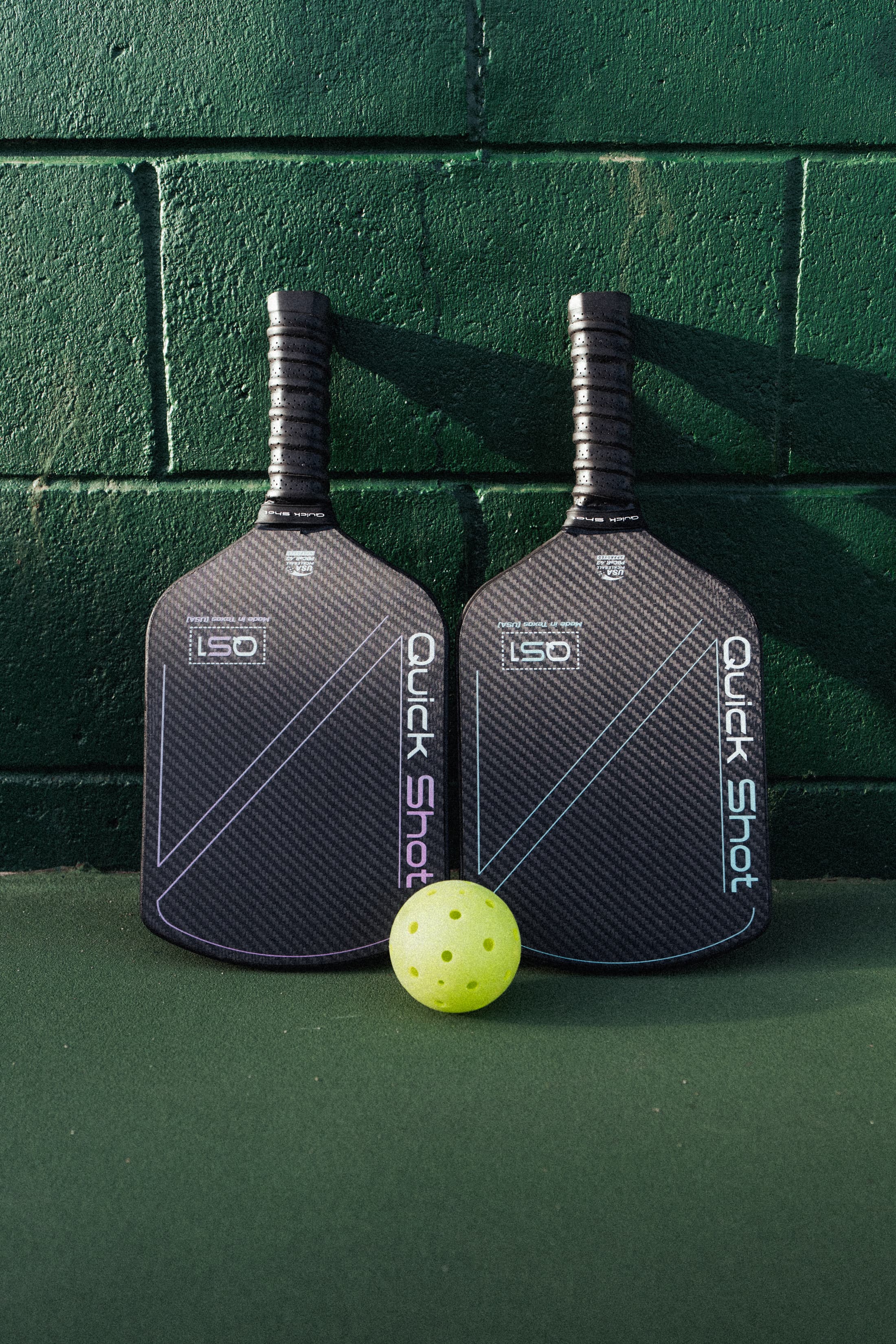
QuickShot Paddles uses traditional cold-press construction with a proprietary honeycomb foam core. The decision was deliberate: the foam core construction gives a more vibration-dampening, arm-friendly feel that thermoforming cannot replicate, and the cold-press bond provides long-term consistency without the delamination risk.
The Quick Shot QS1 is built on traditional cold-press construction with a 14mm honeycomb polymer core and raw 3K Twill carbon fiber face. Its hybrid body splits the difference between widebody forgiveness and elongated reach. The standout spec is the proprietary vibration-dampening 3D printed grip— it absorbs shock at the handle for longer, more comfortable play without the delamination risk that comes with thermoformed construction. For players who want performance that stays consistent over months, not weeks, the QS1's traditional build is a deliberate advantage.
Explore the full lineup at quickshotpaddles.com.
Ready to Upgrade Your Game?
Shop premium pickleball paddles, designed and manufactured in the US — carbon fiber faces, honeycomb cores, USA Pickleball approved.
Shop Quick Shot PaddlesBottom Line
Thermoforming is a real construction innovation — not marketing hype. It genuinely makes paddles stiffer and more powerful. Whether that is the right trade-off for you depends on your playing style, health priorities, and how often you replace equipment.
For most recreational and club players who want a paddle that performs consistently for 12–18 months, stays USAP-compliant, and is gentle on the arm, traditional cold-press construction with a quality foam core remains the more practical choice. For tournament power players who replace their paddle regularly and want maximum pop — thermoformed is worth exploring.
?Frequently Asked Questions

Co-founder and lead play-tester at Quick Shot Paddles. Sets the performance bar for every paddle before it ships.