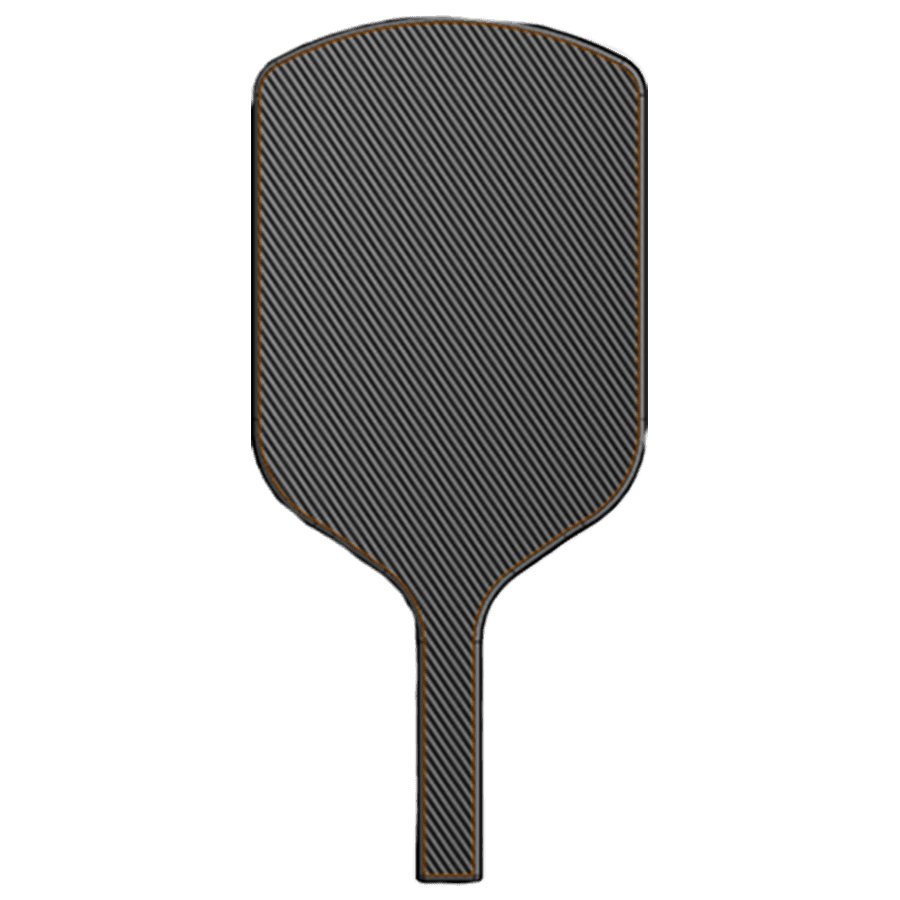
What Is 3K Twill Carbon Fiber? The Weave Behind Elite Paddle Faces
If you have shopped for a premium pickleball paddle in the last two years, you have seen "3K twill raw carbon fiber" plastered across marketing copy. It sounds like a spec that should matter — and it does. Here is what 3K twill actually is, what it is not, and why the weave pattern on your paddle's face changes how the paddle plays.
The short version
3K twill is a weave pattern, not a fiber grade. The two numbers in the name describe how the carbon sheet is built:
- 3K refers to the "tow" — a bundle of carbon filaments. A 3K tow contains 3,000 individual filaments. Lower tow counts mean tighter, more uniform weaves.
- Twill is a 2-over-2 diagonal weave pattern (the same weave you see on expensive suit fabric). It distributes fibers evenly across both axes, which gives the sheet consistent stiffness and surface texture.
Put together, 3K twill produces a carbon sheet with a tight, uniform, gritty surface that is ideal for a paddle face. You get the same feel and the same spin in the center of the face as you do near the edges.
3K twill vs 6K, 12K — why tow count matters
Weaves come in multiple tow sizes. The difference shows up in your hand:
- 3K: Small tows, tight weave. Consistent surface texture across the entire face. The competitive standard for pickleball paddles.
- 6K: Mid-sized tows. Slightly less uniform. Occasionally used in budget carbon products.
- 12K: Large tows. Very dramatic "chunky" visual weave, but the large filament bundles create dead spots between tows. Spin drops off on mis-hits.
If you're choosing between 3K twill and a chunky 12K weave, pick 3K every time. The visual is less flashy, but it plays more consistently.
What the weave does not tell you
A lot of paddle marketing tries to make "3K twill" do too much work. The weave tells you how the sheet is built. It does not tell you:
- The fiber grade. Brands love quoting aerospace fiber-grade acronyms. In practice, once a weave is laminated with resin into a ~1mm paddle face, the difference between fiber grades is small compared to what the weave, resin, and raw-vs-painted finish contribute.
- The resin quality. The epoxy system that bonds the weave determines how crisp or muted the paddle feels and how long it lasts. Cheap resin turns gummy after a season of UV and sweat.
- Raw vs painted finish. A painted face seals over the weave and kills spin grip, no matter how good the underlying 3K twill is.
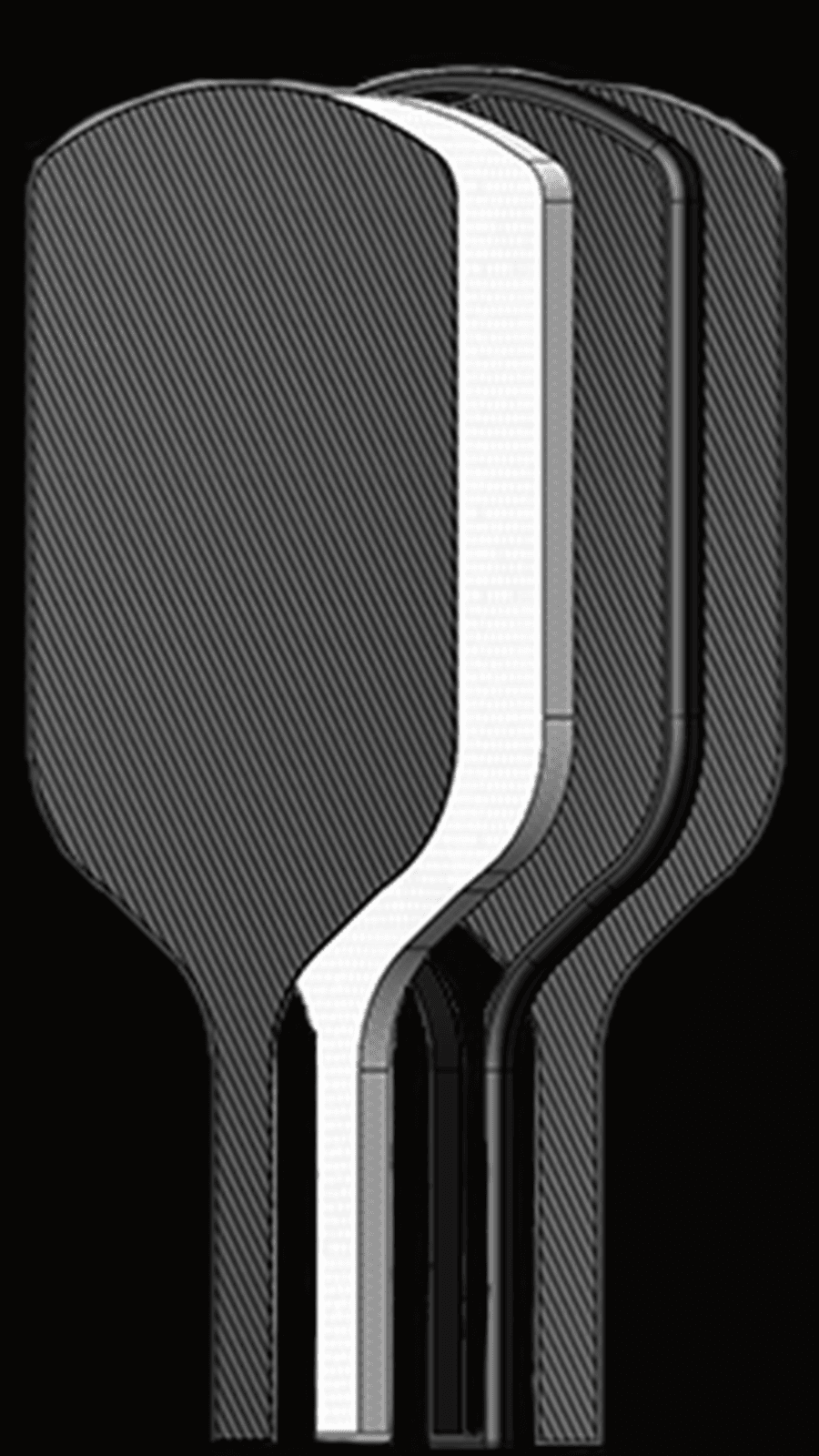
- Construction method. Thermoformed unibody and glue-pressed stacks play completely differently, even with the same weave on top.
For the full spec-sheet checklist, see our carbon fiber pickleball paddle buyer's guide.
How to spot fake "3K twill" paddles
"3K twill" is not a regulated term. Some brands use it loosely, and a few cheap paddles advertise 3K twill while using a plain-weave or painted face. Red flags:
- A clear coating or decorative paint on the face. Real raw carbon fiber has a visible weave and a matte, slightly grippy texture. A glossy or painted face cannot grip the ball the way raw 3K twill does, regardless of what the sticker says.
- Prices below $100. A complete paddle with a real raw 3K twill face, a quality polypropylene honeycomb core, and proper thermoforming costs manufacturers roughly $50–$80 in materials. Under $100 retail, corners have been cut.
- Overly smooth face. Drag a fingernail across the face — you should feel the nail catch on the weave pattern. A smooth face is not a raw weave.
Ready to Upgrade Your Game?
Shop premium pickleball paddles, designed and manufactured in the US — carbon fiber faces, honeycomb cores, USA Pickleball approved.
Shop Quick Shot PaddlesWhy the weave actually matters for your game
Three places a proper 3K twill weave shows up in real play:
1. Spin consistency
A tight, uniform weave holds its spin-generating micro-texture for hundreds of hours of play, and — because the texture is uniform across the face — mis-hits still bite the ball. See our best paddles for spin guide for what that means practically.
2. Pop consistency
Energy return stays consistent across the face. Chunkier weaves (12K) develop soft spots between tows, which feel like dead zones mid-rally.
3. Durability
Edge chips and incidental damage propagate more slowly through a tight, uniform weave than through large-tow weaves or plain-weave sheets. You get more months of consistent performance before the face dies.
What Quick Shot uses
Every Quick Shot paddle face is a raw 3K twill carbon fiber weave, peel-ply finished to maintain the spin-generating micro-texture. We cut the sheets by CNC in our Texas workshop and press them to polypropylene honeycomb cores. The full workshop tour lives in how we build Quick Shot paddles.
We specify 3K twill because our on-court testing shows it plays more consistently and lasts longer in real pickleball conditions than chunkier weaves. The weave is where the trade-off curve is best for our sport — not a fiber-grade sticker.
?Frequently Asked Questions

Lead engineer behind every Quick Shot paddle. Writes about materials, construction, and the engineering behind high-performance paddles.