Carbon Fiber Pickleball Paddle Buyer's Guide (2026)
Almost every premium pickleball paddle sold in 2026 is a carbon fiber paddle. But the label hides a lot of variation: 3K vs 12K weave, painted vs raw face, and thermoformed vs glue-pressed construction. This buyer's guide walks through every spec on a carbon fiber paddle's product page so you can tell a $120 paddle from a $300 paddle without swinging one. Start here if you're already sold on carbon — for the full pros-and-cons against other materials, jump to our carbon fiber vs fiberglass comparison.
Why carbon fiber wins on a pickleball paddle
Carbon fiber has three properties that matter on a pickleball court:
- Stiffness per gram. More energy returns to the ball on contact, which is why carbon paddles feel crisp on drives.
- Surface texture. Raw carbon weave bites the ball for spin — more on this below.
- Fatigue life. Carbon holds its stiffness longer than fiberglass, which means your paddle plays the same in month 12 as in week 1.
Face quality: what actually matters on a carbon paddle
A lot of paddle marketing leans on aerospace-grade fiber acronyms that mean very little once the weave is laminated into a paddle. What actually determines how a carbon face plays is a short list:
- Raw vs painted. Raw carbon gives you spin; painted carbon gives you cosmetics. Covered in its own section below.
- Weave pattern. 3K twill is the competitive standard because it's uniform across the whole face. 12K weaves look dramatic but feel inconsistent on off-center hits.
- Resin system. The epoxy that bonds the weave affects how crisp or muted the paddle feels on contact. Cheap resin systems turn gummy after a few months of UV and sweat.
- Construction. Thermoformed unibody vs glue-pressed stack — two very different paddles even when the face fiber is identical.
Our 3K twill explainer goes deeper on why weave, not fiber-grade labels, is what you should actually check on a spec sheet.
Weave: 3K, 6K, 12K twill
A "tow" is a bundle of fibers. 3K means 3,000 fibers per tow. The lower the tow count, the tighter and more uniform the weave, and the more consistent the spin response. 3K twill is the competitive standard. Higher tow counts (12K) look more dramatic but feel less consistent on off-center hits.
Raw vs painted faces
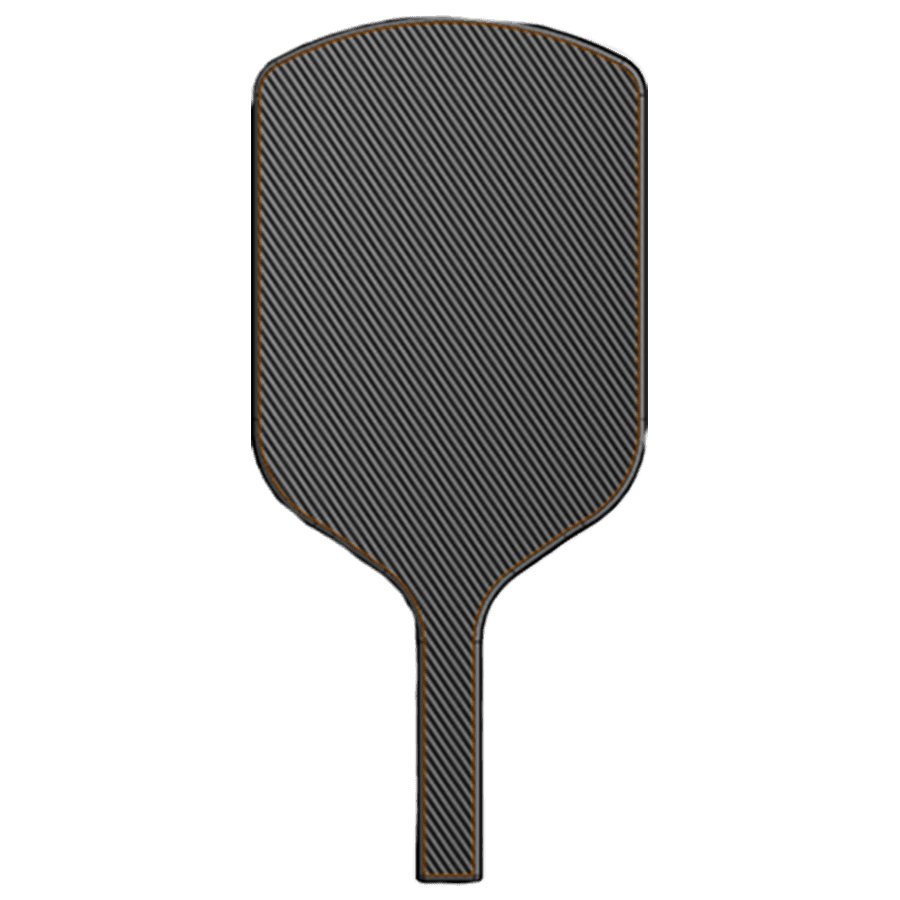
Raw carbon means the weave is bonded with clear resin only — no paint, no sealant. The micro-roughness of the weave grabs the ball, which loads spin. Painted faces seal over that texture and, over time, lose grit. Every serious 2026 paddle uses a raw face. If the marketing copy talks about a "custom artwork panel" instead of raw carbon, assume it's painted.
Thermoformed vs glue-pressed construction
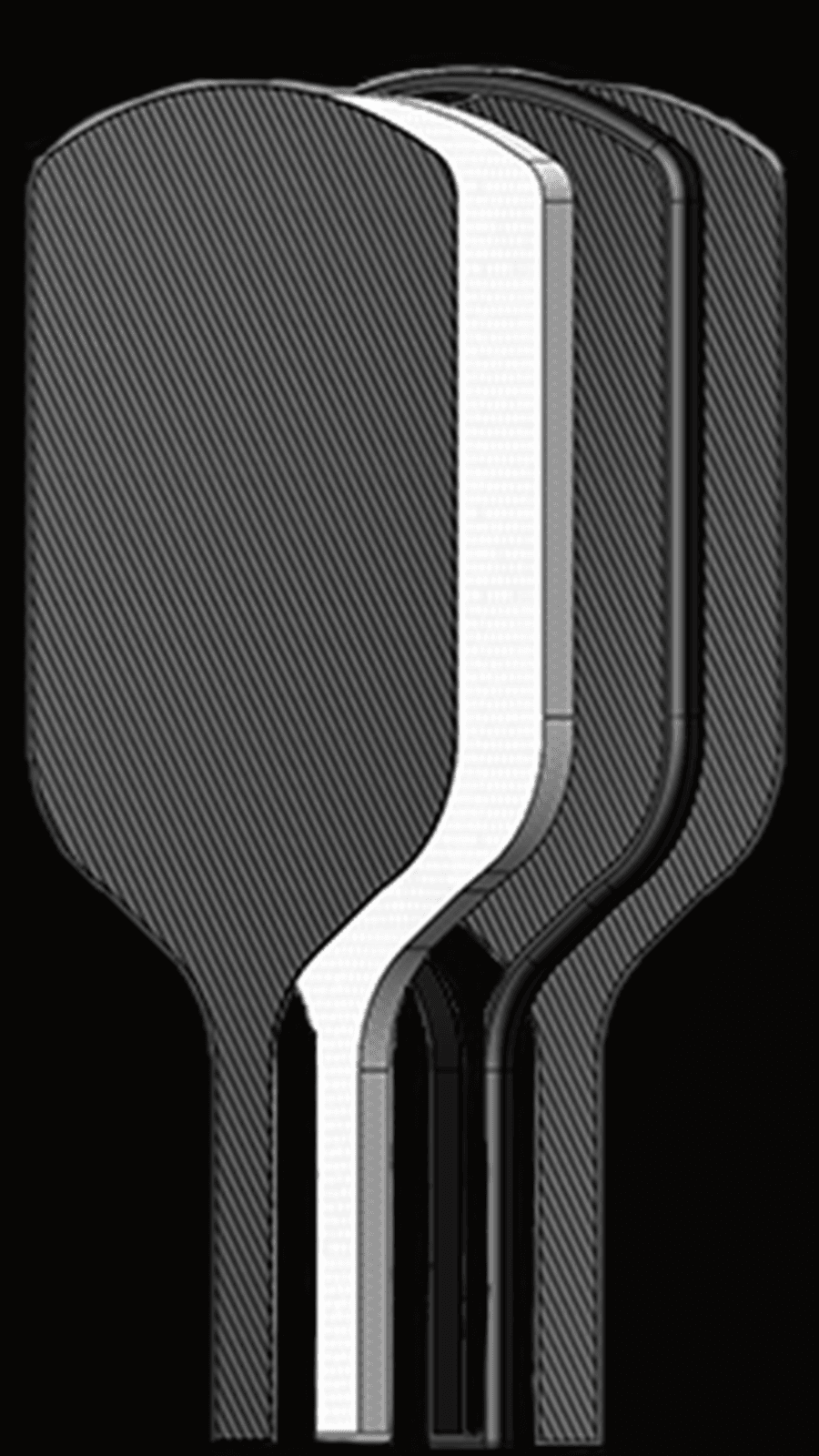
A thermoformed paddle is cured under heat and pressure so the face and core bond into one unibody shell. Glue-pressed paddles stack face, core, and edge guard and rely on adhesive. Thermoformed paddles have a stiffer, more connected feel — we cover this in our thermoformed paddle guide.
Core thickness
Carbon face, polypropylene honeycomb core — but at what thickness? 14mm is poppier, 16mm is softer with a bigger sweet spot. Full comparison in our 14mm vs 16mm paddle core guide.
What to look for on the spec sheet
- Raw 3K twill carbon fiber face (unpainted, unsealed)
- 14mm or 16mm polypropylene honeycomb core
- Well-bonded unibody or hybrid edge
- 7.8–8.2 oz weight
- USA Pickleball approved under the current standard
If any of those are missing or hidden in fine print, it's not a tournament-grade carbon paddle — regardless of the price.
Ready to Upgrade Your Game?
Shop premium pickleball paddles, designed and manufactured in the US — carbon fiber faces, honeycomb cores, USA Pickleball approved.
Shop Quick Shot PaddlesWhere to go next
?Frequently Asked Questions

Lead engineer behind every Quick Shot paddle. Writes about materials, construction, and the engineering behind high-performance paddles.