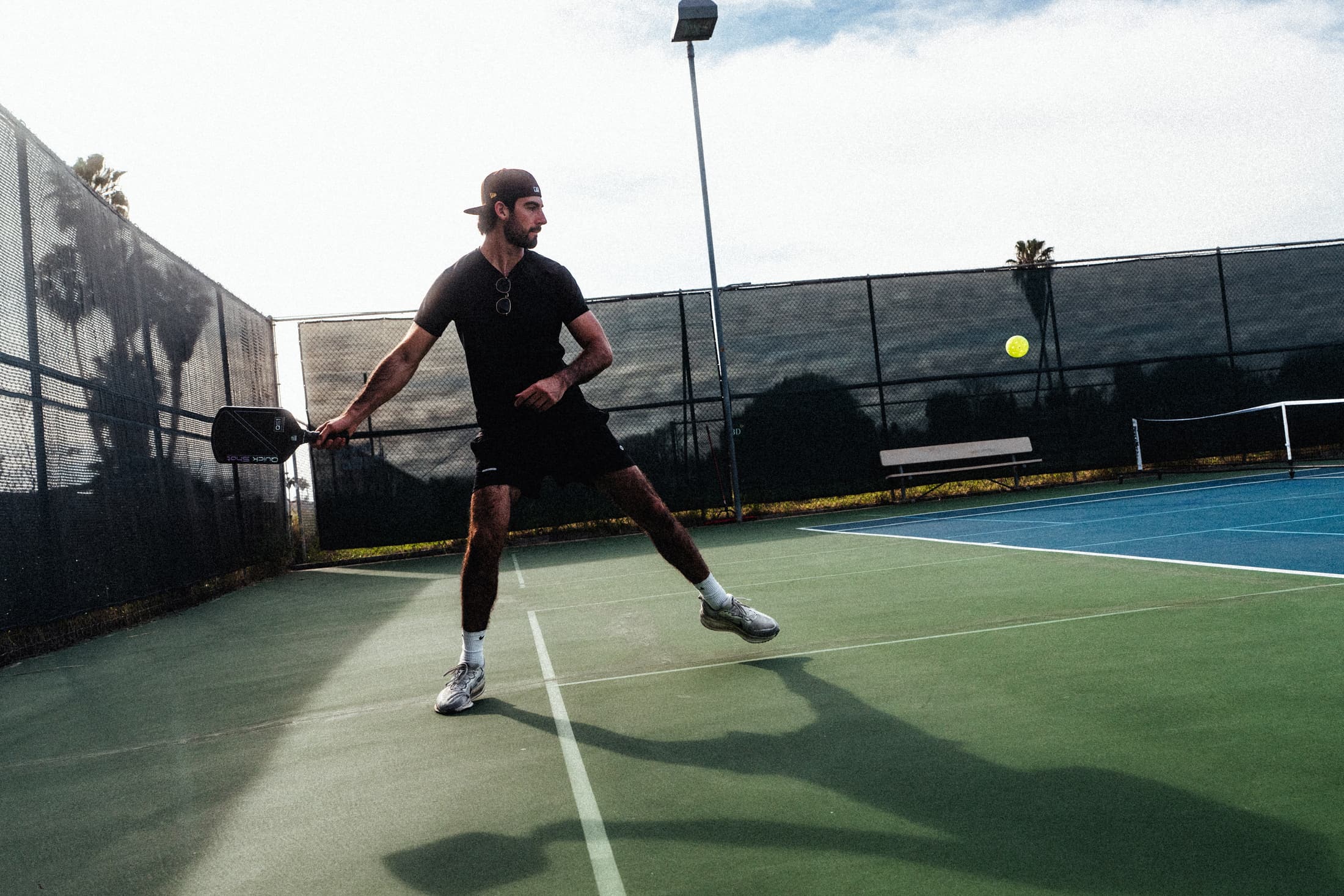
Best Pickleball Paddles for Tennis Elbow: Protect Your Arm Without Quitting the Game
Tennis elbow — or lateral epicondylitis — is now the number-one injury complaint in recreational pickleball. Millions of players are dealing with that nagging outside-elbow ache after a session, and too many of them are either quitting the sport or playing through pain that gets worse over time.
The good news: in the majority of cases, pickleball tennis elbow is a paddle-selection and technique problem. Fix the paddle, modify the technique, and most players can continue playing pain-free.
Why Pickleball Causes Elbow Problems
Tennis elbow in pickleball comes from one primary mechanism: vibration transmitted up the kinetic chain from paddle face → handle → wrist → forearm → elbow. Every time you hit the ball, a wave of vibration travels into your arm. Multiply that by 400–600 shots per session, three days a week, and the extensor tendons attached to your lateral epicondyle (outside elbow bone) start to break down.
Three paddle characteristics make this worse:
- Stiff core (thin or aluminum): Transfers more shock per hit than a thick polymer or foam core.
- Excessive weight (over 8.0 oz): Requires your forearm muscles to work harder on every swing to stabilize and decelerate the paddle.
- Wrong grip size: Too large a grip causes the forearm to over-tighten to prevent the paddle from rotating. Too small causes gripping force to compensate for instability.
The Specs That Protect Your Elbow
Core Thickness: 16mm Minimum
This is the most impactful single spec change for tennis elbow sufferers. A 16mm core absorbs significantly more ball-impact energy than a 14mm core. The ball stays on the face longer (dwell time), more energy dissipates into the core, and less arrives at your elbow. If you are currently using a 14mm paddle and experiencing elbow pain, switching to 16mm is the first fix to try.
Core Material: Foam Honeycomb Over Polypropylene
Standard polypropylene honeycomb is a solid core, but the cells are hollow and transmit vibration more readily than a denser foam-filled construction. QuickShot Paddles' proprietary honeycomb foam core was designed to address exactly this: the foam-filled cell structure absorbs vibration more effectively than hollow-cell polypropylene, which translates to a measurably quieter feel at the handle. For players managing tennis elbow, this difference is not subtle. See our comparison in the foam core vs honeycomb core guide.
Weight: 7.2–7.6 oz
Reducing paddle weight is the fastest way to reduce arm load. Every 0.2 oz you remove from the paddle is less inertia your forearm has to decelerate on every swing and reset. For players with active elbow pain, start at or below 7.6 oz. Players in recovery who want to stay on the court can often tolerate 7.8 oz with good technique — but do not push into 8.0+ until you are fully healed. More in our paddle weight guide.
Grip: Correct Size + Cushioned Overgrip
Check your grip size against our grip size guide. If you are unsure, go slightly smaller and add a cushioned overgrip — the extra padding absorbs vibration at the handle and softens the connection between paddle and hand. This is one of the cheapest arm-protection upgrades you can make.
What Doesn't Work (Common Myths)
Vibration Dampeners
The small rubber dampeners used on tennis racquets do not work on pickleball paddles. Tennis dampeners work on strung racquets because they interrupt string vibration. Pickleball paddles have no strings — the vibration comes from the solid paddle construction itself, and a rubber add-on at the handle does nothing to address that. Focus on core material and weight instead.
Compression Sleeves on Their Own
A compression sleeve helps manage pain and supports tissue recovery, but it does not fix the root cause. If your paddle is transmitting excessive vibration, you will continue aggravating the tendon even with a sleeve. The sleeve and the right paddle together are a meaningful combination — the sleeve alone is not a solution.
Technique Changes That Help
Even the best paddle for tennis elbow works better with these technique adjustments:
- Loosen your grip between shots. Many players hold a death grip on the paddle for the entire rally. Reset your grip tension to about 4/10 between shots and tighten to 6–7/10 just at impact.
- Use your legs on drives. Players who generate power entirely from their arm put more strain on the elbow. Drive from the ground up — legs, hip rotation, shoulder — and let the arm follow.
- Shorten your backswing on dinks. Longer backswings mean more deceleration at contact. Keep dink swings compact and controlled.
QuickShot Paddles for Tennis Elbow
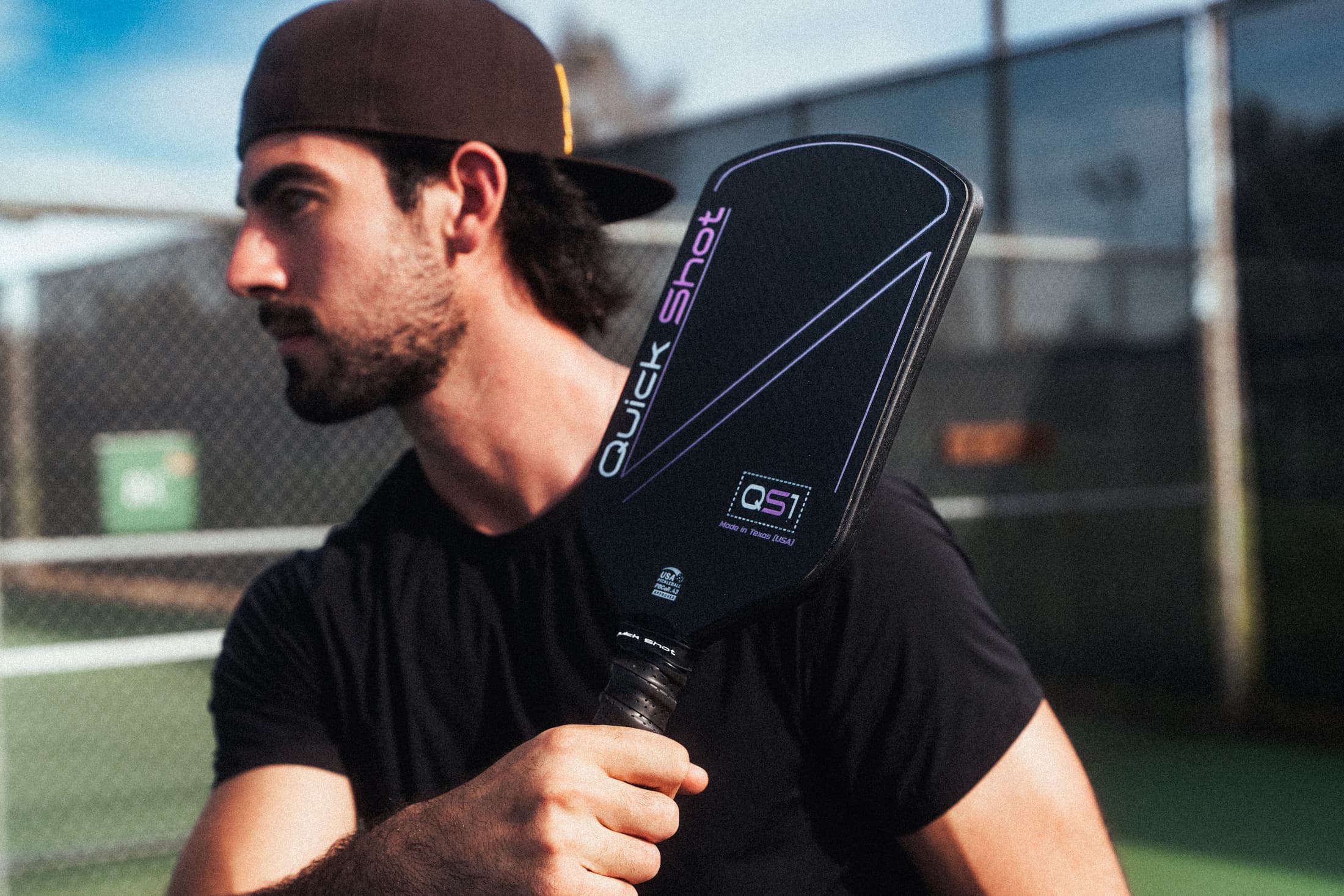
The Quick Shot QS1 is our recommendation for players managing tennis elbow. Its defining feature is the proprietary vibration-dampening 3D printed grip — engineered to absorb shock at the handle before it travels up into the wrist and elbow. This is the QS1's biggest differentiator from conventional paddles: most brands manage vibration through core thickness alone, but the QS1 addresses it directly at the grip where the connection to your arm begins. Paired with a 14mm honeycomb polymer core, raw 3K Twill carbon fiber face, and a hybrid body that gives you the best of widebody forgiveness and elongated reach, it is one of the most arm-conscious paddles available.
Find it at quickshotpaddles.com.
Ready to Upgrade Your Game?
Shop premium pickleball paddles, designed and manufactured in the US — carbon fiber faces, honeycomb cores, USA Pickleball approved.
Shop Quick Shot PaddlesWhen to See a Doctor
If elbow pain persists beyond 2–3 weeks of rest and proper paddle/technique adjustments, see a sports medicine physician or physical therapist. Lateral epicondylitis left untreated can progress to a chronic condition requiring injections or surgery. Most cases respond well to PT, rest, and activity modification — but only if caught and treated before they become chronic.
Bottom Line
The best pickleball paddle for tennis elbow is one that keeps you on the court. Prioritize a 16mm foam or polymer honeycomb core, a weight under 7.8 oz, a properly sized grip, and a cushioned overgrip. Make the technique adjustments above, and most players can continue playing — and even improving — while managing elbow health.
?Frequently Asked Questions

Co-founder and lead play-tester at Quick Shot Paddles. Sets the performance bar for every paddle before it ships.