Best Pickleball Paddle for Advanced Players (4.0–5.0+) in 2026
By the time you hit 4.0 and above, you've already figured out what most paddle marketing gets wrong. You don't need more power — you need to control the power you have. You don't need more spin — you need spin that's predictable and repeatable. And you definitely don't need a flashy paddle that covers up weak technique. You need a precision tool.
Here's what actually matters when you're buying a paddle at the advanced level.
What Advanced Players Actually Want From a Paddle
We asked ourselves this question when we were designing Quick Shot's 16mm line, and here's what we kept coming back to:
- Predictable response. The ball comes off the face the same way every time, no matter where on the face you hit it.
- Long dwell time. You need milliseconds of ball-face contact to shape resets, drops, and third-shot dinks with spin.
- Quiet soft game, lively hard game. Dinks and drops need to die. Drives and counters need pop.
- No surprises during matches. Core crush, delamination, and face degradation at month 3 are disqualifying at this level.
Spec Checklist for 4.0–5.0+ Paddles
Core Thickness: 16mm
The clear default for advanced play. 16mm gives you the control window needed for tight resets and dinks. Some doubles specialists carry a 14mm as a secondary paddle for transition-zone drives, but 16mm should be your primary. See 14mm vs 16mm core guide.
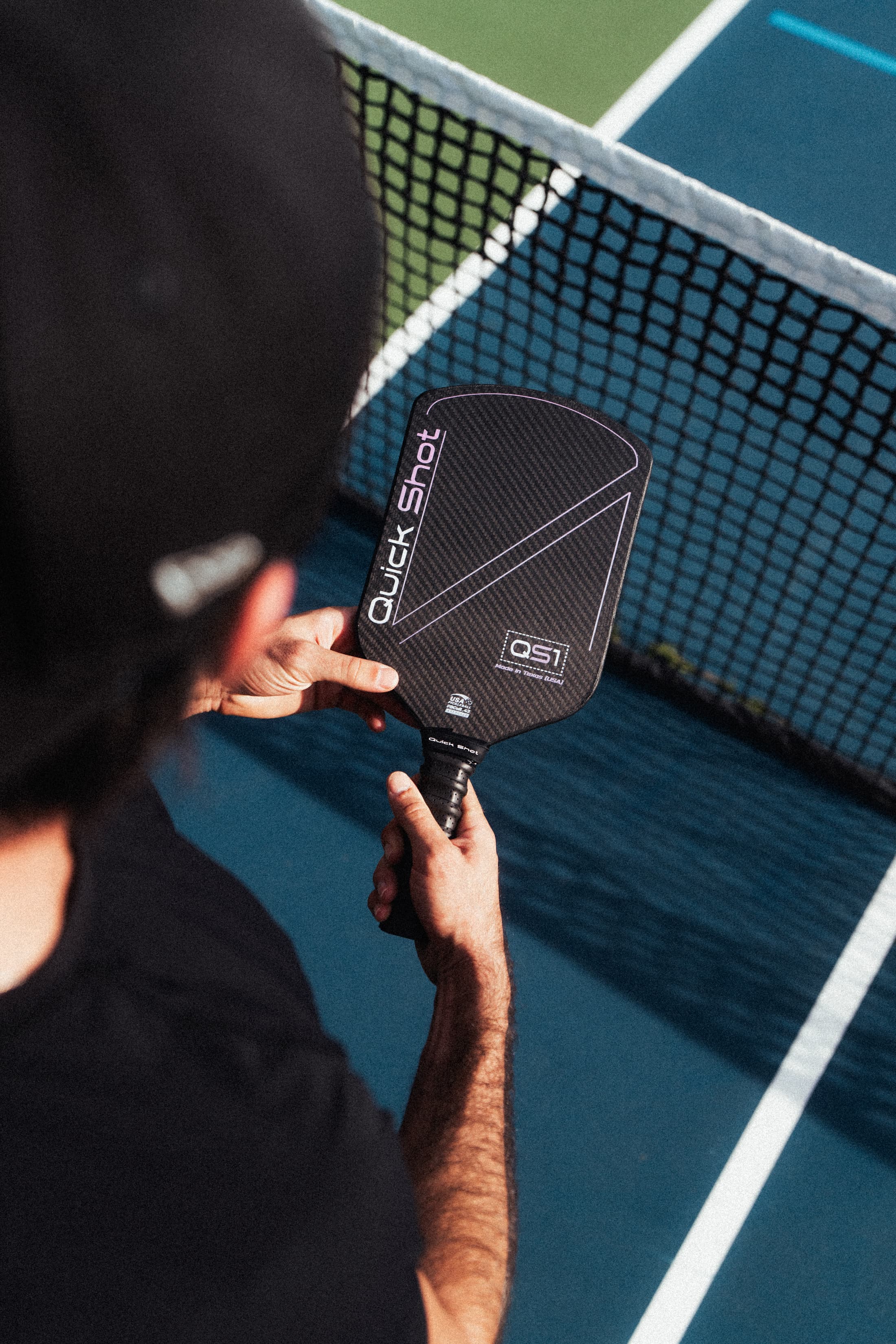
Face Material: Raw 3K Twill Carbon Fiber
Painted carbon and chunky 12K weaves work fine for intermediate play. At 4.0+, the spin fidelity, feel consistency, and longevity advantages of a raw 3K twill weave are worth every dollar. Read our breakdown in 3K Twill carbon fiber explained.
Weight: 7.9–8.3 oz
Most 4.5+ tournament players we talk to land between 7.9 and 8.3 oz static weight. Below that, you lose plow-through on counters. Above that, your hand-speed in firefights suffers. You can fine-tune from here with lead tape.
Shape: Standard or Elongated (Depends on Play Style)
Standard shape if you play a lot of doubles and need hand-speed. Elongated if you play singles or rely on reach and leverage. Hybrid shapes split the difference. More in elongated vs widebody.
Construction: Cold-Pressed, Not Thermoformed
This is the one most players at 4.0+ are starting to catch onto. Thermoformed paddles get stiff and powerful but delaminate and crush at the edges after a few months. For tournament-level consistency, cold-press construction wins. See thermoformed paddle guide.
The 'Advanced Paddle' Marketing Trap
One thing to watch out for: brands love to slap "pro series" or "tour" on their top-line paddles and charge $50 more. Ignore the label. Look at the specs:
- Is it 16mm? Or is "pro" just branding on the 14mm?
- Is it 3K Twill face? Or just generic carbon?
- Is it cold-pressed? Or thermoformed?
- Is the swing weight in a range you actually want?
If the answer to those four questions is yes, the paddle is a legitimate advanced-level tool. If not, the "pro" branding is marketing.
Quick Shot's 16mm Approach
We built our 16mm line specifically around the advanced-player checklist above:
- 16mm polypropylene honeycomb core, cold-pressed
- 3K Twill 3K twill carbon fiber face with peak-spin surface treatment
- 7.9–8.3 oz static weight, hand-selected to sub-gram tolerance
- Hybrid edge geometry (see edge guard guide)
- USAP-approved, tournament-ready
- Each paddle signed and numbered — full traceability
The whole construction process is detailed in how we build Quick Shot paddles.
Ready to Upgrade Your Game?
Shop premium pickleball paddles, designed and manufactured in the US — carbon fiber faces, honeycomb cores, USA Pickleball approved.
Shop Quick Shot PaddlesWhat Top Players Are Actually Using
If you watch the PPA and MLP tours, you'll see a lot of sponsored paddles (obviously). But if you look at unsponsored 4.5–5.0 club players, the pattern is clear: 16mm cores, 3K Twill faces, standard-to-elongated shapes, and static weights in the 8.0 oz neighborhood. The "pro" paddle for them isn't always the most expensive — it's the most consistent one they can afford to replace every 6–9 months.
When Should Advanced Players Replace Their Paddle?
At 4.0+ level, paddle lifespan matters. Most advanced players feel paddle decline around the 6-month mark (if playing 10+ hours/week). See our data-driven breakdown in how long does a pickleball paddle last.
Budget Reality
Advanced paddles are expensive ($200–$280 retail) but the per-hour cost is fair. If a $230 paddle lasts 6 months at 10 hours/week, that's $0.88 per hour of play — less than a cup of coffee per court session. Cheap out at the advanced level and you'll pay for it in inconsistency, not just durability.
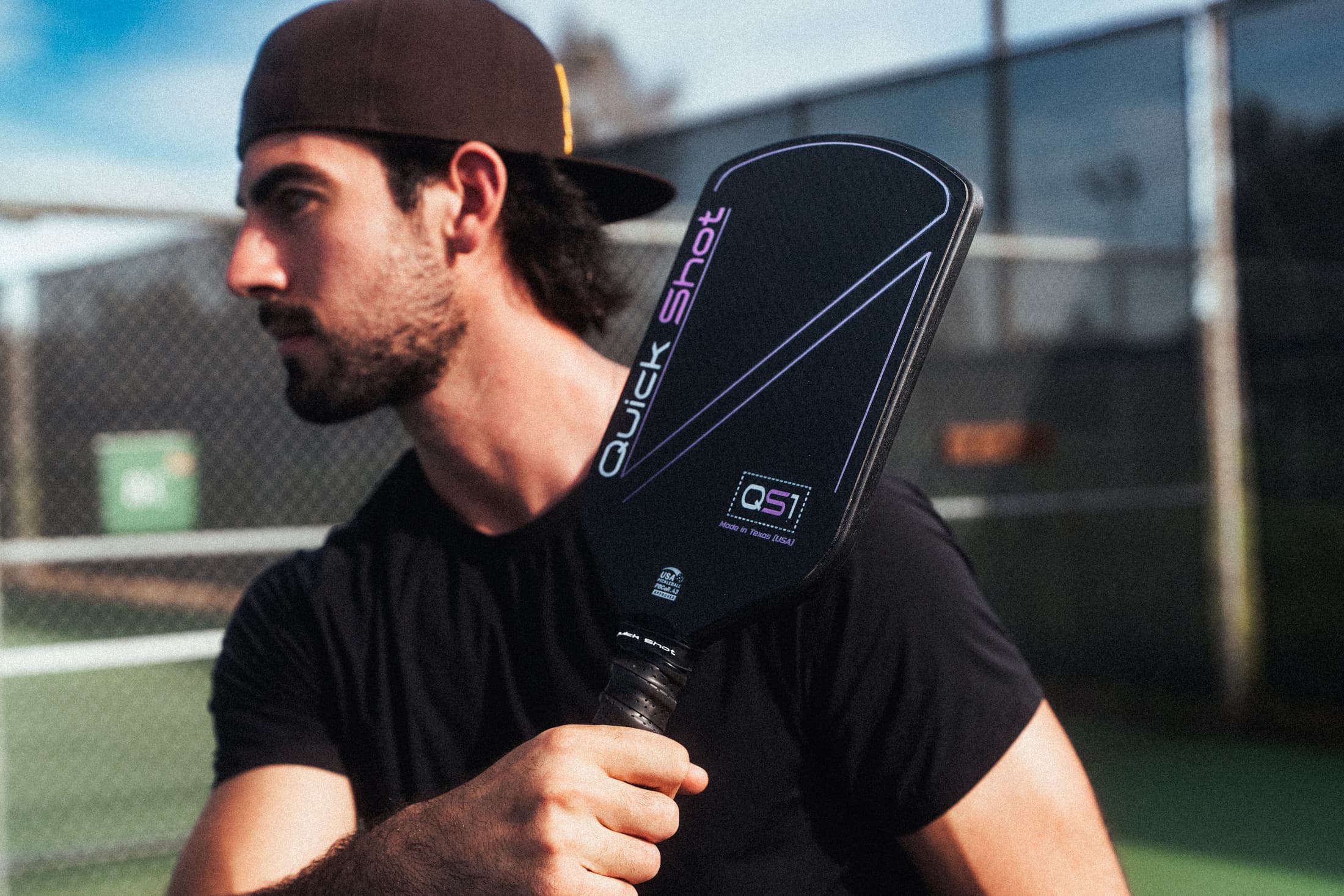
The QS1 elongated is designed for exactly this tier — 4.0+ players who want tournament-grade power and spin without the flagship markup. See the full spec sheet on the Quick Shot pickleball paddles store or dig deeper in our best pickleball paddle 2026 guide.
?Frequently Asked Questions

Co-founder and lead play-tester at Quick Shot Paddles. Sets the performance bar for every paddle before it ships.