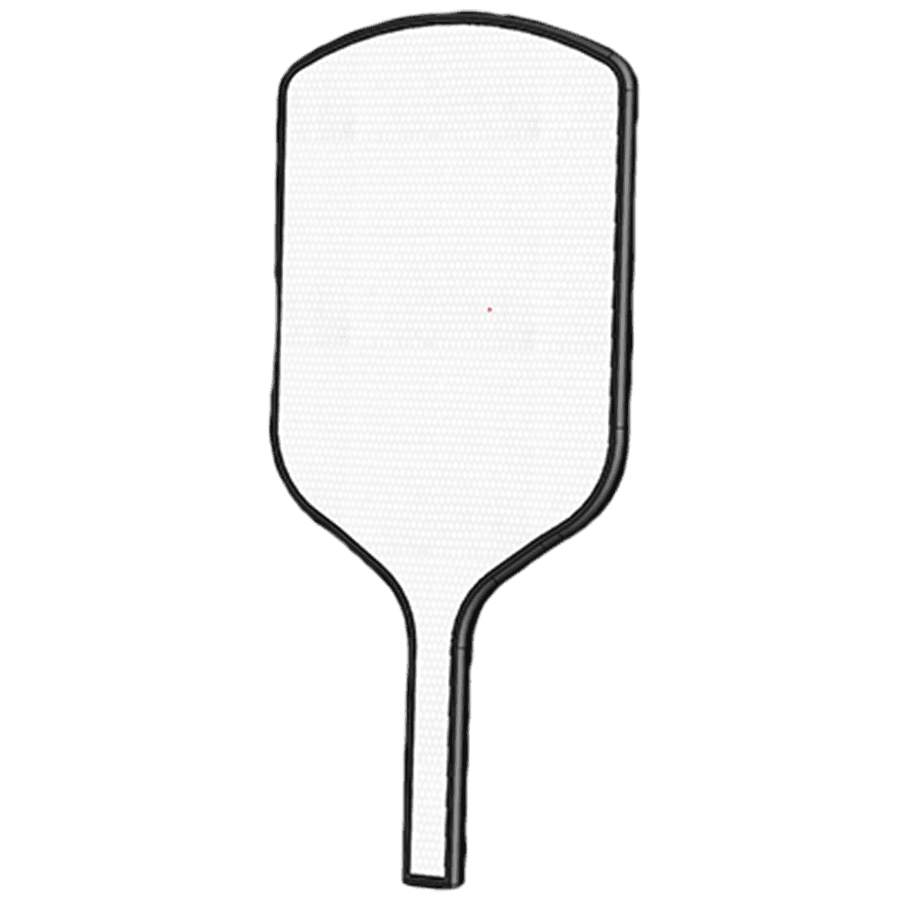
How to Choose a Pickleball Paddle: A Complete Beginner's Guide (2026)
Walk into any sporting goods store or browse pickleball gear online and you'll be hit with a wall of paddles — carbon fiber, fiberglass, thermoformed, honeycomb core, 14mm, 16mm, elongated, standard. It can feel overwhelming, especially if you're brand new to the sport.
This guide breaks down every spec you need to understand, in plain language, so you can pick the right paddle on the first try instead of buying three paddles trying to figure out what you like.
Step 1: Understand Paddle Weight
Weight is the first spec to nail down because it affects everything: arm health, power, control, and reaction time at the kitchen line. Paddles fall into three rough categories:
- Lightweight (under 7.3 oz): Fast hands, easy on the arm, great for net play and quick exchanges. Less plow-through on drives. Popular with seniors and players with arm or shoulder issues.
- Mid-weight (7.3–8.0 oz): The most versatile range. Works well for both soft game and power shots. Recommended for most beginners and intermediate players.
- Heavy (8.0 oz+): Maximum drive power and stability. Preferred by aggressive players who play from the baseline and have the conditioning to handle the added arm load.
For most new players, start in the 7.5–7.9 oz range. You can always add lead tape later to fine-tune, which is cheaper than buying a new paddle. Learn more in our detailed weight guide.
Step 2: Understand Core Material
The core is the inside of your paddle — and it has a bigger impact on feel than almost any other spec. Modern paddles use one of three core types:
- Aluminum honeycomb: The budget option. Found in paddles under $60. Light and decent, but less feel and a shorter lifespan. Fine for casual play, not ideal for developing players.
- Polypropylene (polymer) honeycomb: The current standard. Quieter, more comfortable, better vibration absorption than aluminum. Almost every quality paddle at $80+ uses this core.
- Honeycomb foam core: The premium tier. A denser, more consistent foam structure reduces vibration even further, extends dwell time (how long the ball stays on the face), and provides superior feel for soft-game shots. QuickShot Paddles' proprietary honeycomb foam core is designed specifically for players who want more feedback and arm comfort than standard polypropylene provides.
For a beginner, polymer honeycomb is a great starting point. If arm comfort is a priority or you want to invest once in a paddle that will serve you for years, a honeycomb foam core is worth the step up. Compare core options in our foam core vs honeycomb core breakdown.
Step 3: Understand Core Thickness
Most paddles today come in two thickness options: 14mm and 16mm. This is a big decision:
- 16mm: More forgiving. Better for control, soft game, and arm-friendly play. The default recommendation for most players, especially beginners.
- 14mm: Stiffer and more powerful. Less forgiving on mishits. Preferred by advanced players who generate their own spin and want maximum pop on drives.
Start with 16mm. The full comparison is in our 14mm vs 16mm guide.
Step 4: Understand Face (Surface) Material
The face is the outer hitting surface, and it determines how the ball interacts with your paddle on every shot.
- Fiberglass (composite): Slightly flexible, creates a natural trampoline effect that adds power with less effort. Forgiving and beginner-friendly. Lower spin ceiling than carbon.
- Carbon fiber: Stiffer, more precise, higher spin potential. Better for players who want to shape shots with topspin and slice. Raw carbon faces (uncoated 3K twill weave) offer the most spin grip. Read more in our carbon vs fiberglass comparison.

Step 5: Find Your Grip Size
Grip circumference is measured in inches and typically ranges from 4.0 to 4.5 inches. Getting this wrong leads to arm fatigue, reduced control, and over time, overuse injuries.
A quick way to measure: hold a ruler in your dominant hand, palm up, and measure from the middle crease of your palm to the tip of your ring finger. That measurement (in inches) is your approximate grip size:
- Under 4 inches → 4.0 grip (or smallest available)
- 4.0–4.25 inches → 4.0–4.125 grip
- 4.25–4.5 inches → 4.25–4.5 grip
When in doubt, go smaller — an overgrip can add up to 1/8 inch back. Full details in our grip size guide.
Step 6: Choose Your Shape
Paddle shape has become a hot topic as more players move toward elongated designs. Here's the quick breakdown:
- Standard (wide body): Wider face, larger sweet spot, better for beginners and doubles specialists. More forgiving, faster at the kitchen, easier to control.
- Elongated: Longer reach, more leverage for spin, better for singles play and baseline drives. Smaller sweet spot means more consistency is required from the player.
- Hybrid / teardrop: Splits the difference — slightly elongated but with a wider midsection. A versatile option if you play both singles and doubles.
Beginners and doubles players should almost always start with a standard shape. Explore the full comparison in our elongated vs wide body paddle guide.
QuickShot Recommendations for New Players
If you're buying your first real paddle (not a starter set paddle), the Quick Shot QS1 is worth a close look. It is built on a hybrid body — the best of widebody forgiveness and elongated reach in one frame — with a 14mm honeycomb polymer core, raw 3K Twill carbon fiber face, and a proprietary vibration-dampening 3D printed grip. That grip is the part most beginners do not think about: it absorbs shock at the handle so your arm does not pay for every mis-hit during the learning curve. It is a paddle you will not outgrow — many players carry it well into the 4.0 level.
Find it at quickshotpaddles.com.
Ready to Upgrade Your Game?
Shop premium pickleball paddles, designed and manufactured in the US — carbon fiber faces, honeycomb cores, USA Pickleball approved.
Shop Quick Shot PaddlesWhat Not to Buy as a Beginner
- Cheap starter set paddles. The paddles in a $30 four-player set are functional for a few sessions but will actively slow your development. The aluminum core and thin face give you almost no feel for the ball.
- The most expensive paddle on the shelf. A $280 tour paddle built for 4.5+ players rewards specific technique you haven't developed yet. You won't feel the difference — but your wallet will.
- Used paddles with unknown history. Core crush and face delamination are invisible to the naked eye. A used paddle that looks fine may have a dead core that is ruining your feel. Read our used paddle guide before buying secondhand.
Your Paddle-Selection Checklist
Before you buy, make sure you can check these boxes:
- Weight between 7.3–8.0 oz (or lighter if arm issues are a concern)
- Polymer honeycomb or foam core (not aluminum)
- 16mm core thickness
- Fiberglass or carbon fiber face (fiberglass for beginners, carbon for spin seekers)
- Grip size matched to your hand measurement
- Standard shape unless you have a specific reason for elongated
- Budget of $80–$180 for a beginner-appropriate quality tier
Match all seven and you'll have a paddle that supports your development for years — not just months.
?Frequently Asked Questions

Co-founder and lead play-tester at Quick Shot Paddles. Sets the performance bar for every paddle before it ships.